Location: Home >> Detail
J Psychiatry Brain Sci. 2026;11(6):e260018. https://doi.org/10.20900/jpbs.20260018
 ,
Joseph V. Pergolizzi, Jr. 3,4
1
2
3
4
*
The demonstration that naloxone reverses placebo-induced analgesia established nearly five decades ago that expectation-driven pain relief can be understood as having a pharmacologically tractable neurochemical mechanism. But this specific finding does not explain the placebo phenomenon in general. Subsequent research using pharmacologic challenge, positron emission tomography, and classical conditioning paradigms has shown that placebo responses engage a heterogeneous set of neurobiological systems whose involvement depends on the medical condition being treated, the route by which the expectation was induced, and the history of prior pharmacologic and experiential exposure. This narrative review synthesizes the evidence for endogenous opioid, dopaminergic, endocannabinoid, cholecystokinin-related, immune, and monoaminergic contributions to placebo responses across pain, Parkinson disease, immune-mediated conditions, depression, and anxiety. Throughout, we distinguish neurochemical engagement, association with clinical improvement, and causal mediation demonstrated by pharmacologic blockade. We further consider the nocebo effect as a mechanistic mirror of placebo-induced analgesia, and discuss non-pharmacologic contributors such as regression to the mean, natural history, and response-bias artifacts that account for placebo-like improvements in conditions lacking a demonstrated neurochemical substrate. The evidentiary base for these mechanisms is markedly uneven: causal pharmacologic evidence exists mainly for experimental and postoperative pain; Parkinson disease has receptor-level imaging evidence of dopamine engagement; and depression has one receptor-specific molecular imaging study implicating μ-opioid neurotransmission, alongside correlational functional and metabolic imaging and more speculative monoaminergic hypotheses. Conditioned immune effects are robust in animals and have been reproduced in humans, but conditioned substitution for active immunosuppressive medication without loss of efficacy has not been demonstrated. We present a working model in which a shared upstream process of expectation and associative learning is translated into condition-specific neurochemical pathways, and outline future directions for clinical trial design and interpretation, the ethical use of open-label placebos, and the interpretation of placebo response rates in psychiatric drug development.
CB1, cannabinoid type-1 receptor; CCK, cholecystokinin; CCK-B, CCK type-2; CNS, central nervous system; EEG, electroencephalography; FDG, [18F]fluorodeoxyglucose; fMRI, functional magnetic resonance imaging; HPA, hypothalamic-pituitary-adrenal (HPA); IFN-γ, interferon-gamma; IL-2, interleukin-2; NSAID, nonsteroidal anti-inflammatory drug; OFC, orbitofrontal cortex; PET, positron emission tomography; rACC, rostral anterior cingulate cortex; rCBF, regional cerebral blood flow; sgACC, subgenual anterior cingulate cortex
The ‘placebo effect’ is often used to refer to a unitary phenomenon: an inert intervention that improves symptoms because the person expects it to [1,2]. This framing obscures a more precise and clinically consequential picture. Beginning with the demonstration by Levine et al. (1978) [3] that the selective opioid receptor antagonist naloxone reverses placebo-induced pain relief, a line of pharmacologic and neuroimaging research has shown that different medical conditions engage different, condition-specific neurochemical systems during a placebo response. For example, endogenous opioid release mediates a substantial portion of placebo analgesia in experimental and postoperative pain [4,5]; striatal dopamine release accompanies the placebo response in Parkinson disease [6,7]; the endocannabinoid system contributes to a naloxone-insensitive component of placebo analgesia [8]; classically conditioned changes in cytokine production and lymphocyte function can be elicited in animals and humans [9,10]; and in major depression, placebo-associated μ-opioid neurotransmission, corticolimbic functional changes, and more speculative monoaminergic contributions have been implicated [11,12].
This narrative review has three aims. First, to summarize the mechanistic evidence, organized by medical condition, for the neurochemical systems engaged by placebo administration. Second, to describe the nocebo effect [13] as a mechanistic counterpart that has clarified several of these pathways, particularly the antiopioid role of CCK [14,15]. Third, to identify where the evidentiary base is strong (pharmacologic blockade or receptor-specific in vivo imaging) versus where it is comparatively weak (correlational functional imaging, extrapolation from animal conditioning models, or the absence of a demonstrated biological substrate). This distinction can have clinical import, particularly in psychiatry, where placebo response rates in antidepressant trials are substantial and have increased over time. Placebo responses are therefore not merely epiphenomenal events to be subtracted from trial data; they may represent an engageable therapeutic target mechanism in their own right [16,17].
There has evolved a distinction between a ‘placebo response’ and a ‘placebo effect’, which is not merely semantic. The ‘placebo response’ is meant to represent the entire observed change following placebo administration, encompassing regression to the mean, natural history, participant and experimenter biases, and concurrent care, in addition to the psychological and neurobiological processes; the ‘placebo effect’, in contrast, is meant to represent the specific contributions of expectation and learning/conditioning, which is the narrower phenomenon. This mirrors the standard pharmacological distinction between a ‘drug response’ and ‘drug effect’, and the same logic applies to a ‘nocebo response’ and a ‘nocebo effect’. The current review concentrates on placebo and nocebo effects, but also includes the additional non-specific contributors that inflate the broader placebo response observed in clinical trials. We use the terms accordingly throughout: ‘placebo effect’ where a study design isolates expectation or conditioning from other influences, and ‘placebo response’ where it does not.
This is a narrative, not a systematic, review. Sources were identified through targeted searches of PubMed, Google Scholar, and publisher databases (Science, Nature, The Lancet, JAMA, the American Journal of Psychiatry, and the Journal of Neuroscience) using combinations of the terms “placebo”, “nocebo”, “opioid”, “dopamine”, “cannabinoid”, “cholecystokinin”, “conditioning”, “immunosuppression”, “depression”, and “anxiety”. Foundational studies were prioritized, supplemented by subsequent replications, mechanistic extensions, and contemporary review articles. Because the field’s methodology differs sharply across conditions (e.g., pharmacologic challenge and receptor-binding PET are available for pain and Parkinson disease, whereas depression research relies largely on functional and metabolic imaging, with a single receptor-specific molecular imaging study), the review is organized by condition rather than by neurotransmitter system. The AI application Claude, Sonnet v4.6 (Anthropic, San Francisco, CA, US) was used under the direction of the authors to assist with the development, literature search, and organization of the material.
The modern neurological approach to the placebo effect began with the finding that naloxone, a selective opioid receptor antagonist with no analgesic properties of its own, reversed the pain relief produced by placebo administration in postoperative dental patients [3]. This was the first controlled clinical trial demonstration that a placebo response could be pharmacologically explored. Grevert et al. (1983) [18] replicated a partial naloxone-reversible effect, foreshadowing the later opioid/nonopioid distinction [19,20].
Amanzio and Benedetti (1999) [19] clarified the boundary conditions under which the opioid system is engaged: namely, that placebo analgesia that is induced primarily through verbal expectation is naloxone-reversible, whereas placebo analgesia that is induced through prior conditioning with a nonopioid analgesic (such as an NSAID) is not. This differentiation established that ‘placebo analgesia’ is not one mechanism, but rather includes at least two convergent mechanisms—expectation and conditioning [19,20]—that can recruit different neurochemical pathways depending on patient attributes and prior experience.
Neuroimaging has added to the pharmacologic findings [5,21]. Petrovic and colleagues (2002) [21] used PET scanning to show that placebo analgesia and opioid analgesia activate an overlapping network centered on the rostral anterior cingulate cortex and brainstem regions that are implicated in descending pain modulation. Zubieta and colleagues (2006, 2005) [4,22] extended this by using a μ-opioid receptor-selective radiotracer to show that placebo administration under expectation of pain relief produces reductions in μ-opioid receptor availability, interpreted as endogenous opioid release, in regions that are also engaged by exogenous opioids. Eippert and colleagues (2009) [23] later provided causal evidence in healthy volunteers, using fMRI, that the opioidergic descending pain-control system is involved, since naloxone attenuated both the subjective and the neural placebo response. Benedetti and colleagues (2005) [20] further integrated these findings into a broader account of placebo neurobiology across conditions.
Nearly all of the foundational pharmacologic and neuroimaging evidence reviewed above derives from acute or experimental pain: postoperative dental extraction [3], and short-duration thermal or pressure pain in healthy volunteers [4,5,21–23]. A 2026 review by Boorman and colleagues (2026) [24] catalogs the neurobiological and neuropharmacological mechanisms of placebo analgesia specifically in the context of chronic pain, and proposes that the biological adaptations that make chronic pain difficult to treat pharmacologically, namely, sustained changes to neural, endocrine, and immune function, simultaneously create multiple candidate biological targets through which placebo interventions could act. Whether the opioid and other systems identified in acute-pain paradigms are engaged to a comparable degree, or through comparable mechanism, in established chronic pain remains an open and clinically important question. Chronic pain is accompanied by adaptations in receptors, 2nd-messenger pathways, and reorganized descending pain modulation that could in principle blunt or redirect the mechanisms identified in acute pain.
Parkinson disease offers the clearest demonstration of non-opioid neurochemical engagement during placebo administration. de la Fuente-Fernández and colleagues (2001) [6] used [11C]raclopride PET, which assesses endogenous dopamine release via competition for striatal D2/D3 receptor binding, to show that placebo administration to Parkinson patients produces significant striatal dopamine release, of a magnitude comparable to that produced by therapeutic doses of levodopa. Raclopride binding is a receptor-level measure: a reduction in binding is interpreted as increased endogenous dopamine competing with the tracer, rather than a direct measurement of synaptic dopamine concentration. It is nonetheless more neurochemically specific than downstream metabolic or hemodynamic correlates [6,7], and this finding is among the most direct in vivo evidence of neurotransmitter engagement in the placebo literature.
Subsequent work examined dopamine’s role in reward and motor circuitry: dopamine release following placebo administration occurs in both the dorsal striatum, which subserves motor control, and the ventral striatum, which is implicated in reward anticipation. This has been interpreted as suggesting that the expectation of clinical benefit functions similarly to a reward-predicting cue [7], although the interpretation rests on the known functions of the ventral striatum rather than on direct tests of reward prediction. Lidstone and colleagues [25] showed that placebo-induced dopamine release varied with the stated probability of receiving active medication, consistent with an expectation-dependent mechanism. A review by Quattrone and colleagues (2018) [7] traced nearly two decades of follow-up work that confirmed and extended the original 2001 finding, while also cataloging substantial individual variability in the magnitude of dopaminergic placebo response. Importantly, dopamine release has not consistently tracked clinical benefit: de la Fuente-Fernández and colleagues reported greater release in patients who perceived improvement [6], whereas Lidstone and colleagues found no significant correlation between dopamine release and either subjective or objective motor placebo responses [25]. Thus, dopaminergic engagement during placebo administration in Parkinson disease is well established, but its causal mediation of clinical improvement is not.
Dopamine does not, however, appear to mediate placebo effects in all conditions. For example, pharmacologic manipulation of dopaminergic tone does not reliably alter placebo-induced analgesia in healthy volunteers [26], a null finding independently corroborated in patients with chronic neuropathic pain [27]. Dopamine’s role appears comparatively specific to reward- and anticipation-linked conditions such as Parkinson disease, rather than functioning as a general-purpose placebo neurotransmitter.
Because a substantial fraction of placebo-induced analgesia resists naloxone blockade, Benedetti et al. (2011) [8] investigated whether the endocannabinoid system might account for the residual nonopioid component. Using a conditioning paradigm in which participants were preconditioned with either morphine or the nonopioid NSAID ketorolac before placebo substitution, it was shown that the CB1 cannabinoid receptor antagonist rimonabant selectively abolished placebo-induced analgesia in the ketorolac-conditioned group, while leaving morphine-conditioned (opioid-mediated) placebo analgesia intact. Together with evidence that placebo analgesia after morphine conditioning is naloxone-reversible, whereas placebo analgesia after ketorolac conditioning can be naloxone-insensitive [19], this pattern constitutes a double dissociation: naloxone affects morphine-conditioned but not ketorolac-conditioned (nonopioid-conditioned) placebo analgesia, and rimonabant shows the reverse pattern. It indicates that the specific pharmacologic history of prior conditioning influences which neurochemical system a subsequent placebo will engage, as opposed to there being a single fixed ‘placebo pathway’. The rimonabant finding derives from a single study and awaits independent replication.
The clearest evidence that placebo-like effects extend to objectively measurable, non-subjective physiology comes from psychoneuroimmunologic studies. In the foundational 1975 experiment by Ader and Cohen (1975) [9], a saccharin solution (the conditioned stimulus) was paired with the immunosuppressive drug cyclophosphamide (the unconditioned stimulus) in rats. After conditioning, re-exposure to saccharin alone around the time of immunization with an antigen (sheep red blood cells) was sufficient to attenuate the antibody response, without further drug administration. This was, at the time, a surprising result, since it implied that the immune system could be conditioned in the same manner as, for example, salivation or fear responses.
The same investigators extended the paradigm to a disease model in lupus-prone mice [28]. Conditioned mice received cyclophosphamide on only half of the weekly saccharin presentations and saccharin alone on the remainder. Compared with non-conditioned mice receiving the same cumulative dose of cyclophosphamide, conditioned mice showed delayed development of proteinuria and prolonged survival. The study therefore shows that conditioned cues can enhance the disease-modifying efficacy of an intermittent, reduced-dose drug regimen; it does not show disease modification after complete drug withdrawal. Because it involved a disease process (autoimmune nephritis) rather than an antibody titer alone, it indicated that conditioned immune modulation can affect clinically meaningful outcomes in animals, not only laboratory biomarkers.
Goebel and colleagues (2002) [10] extended the paradigm to humans, pairing the immunosuppressant drug cyclosporine A with a distinctively-flavored drink over several conditioning sessions. On re-exposure to the flavored drink alone (now paired with placebo capsules), healthy volunteers showed measurable suppression of interleukin-2 and interferon-gamma production, plus reduced lymphocyte proliferation. This provided early evidence that behaviorally conditioned immunosuppression, previously shown in rodents [9,28], can occur in humans (using cytokine-level and cellular outcome measures rather than self-report).
Kirchhof and colleagues [29] subsequently tested the paradigm in renal transplant patients maintained on their regular immunosuppressive medication. After a conditioning phase in which a novel-tasting drink was paired with the medication, re-exposure to the drink together with placebo capsules, given in addition to the maintenance regimen, further reduced T-cell proliferation. This establishes that a conditioned immunosuppressive response can be elicited in patients, but because the medication regimen was not reduced, it does not demonstrate that conditioning can replace any portion of active medication without loss of clinical efficacy.
Together, these studies indicate that for immune-mediated conditions, the relevant ‘substance’ explaining a placebo-like effect is not a single endogenous neurotransmitter, but a conditioned central-to-peripheral signaling pathway that can modify specific cytokine and cellular immune responses [9,10]. The central components of this pathway have been characterized chiefly in rodent models, and their identity in humans remains largely undefined.
CCK occupies an unusual position in this literature: rather than mediating placebo relief directly, it appears to function as an endogenous antagonist of the opioid-mediated placebo response, and as a driver of the mirror-image phenomenon, the ‘nocebo’ response (where negative expectations or beliefs about a treatment cause worsening symptoms, reduced efficacy, or more adverse effects, even if the treatment is inert or has no pharmacologic basis for the reactions) [13,17]. Benedetti et al. (1995, 2005) [15,20] showed that the CCK antagonist proglumide potentiates placebo-induced analgesia (consistent with CCK’s known antiopioid action at both spinal and supraspinal sites), and, in a later study [30], that activation of CCK-B receptors with the agonist pentagastrin disrupts opioid-mediated placebo analgesia.
The CCK antiopioid relationship proved equally informative for negative expectations. The CCK antagonist proglumide also blocks nocebo-induced hyperalgesia produced by negative verbal suggestion – the pain-worsening counterpart of placebo-induced pain relief – indicating that CCK contributes causally to expectation-driven pain increases, not merely to the absence of opioid-mediated relief [14,31]. Subsequent work showed that nocebo-induced hyperalgesia is accompanied by HPA axis activation (elevated ACTH and cortisol), which is blocked by the anxiolytic diazepam, while the hyperalgesia itself is blocked specifically by proglumide, dissociating the anxiety component of the nocebo effect from its CCK-dependent pronociceptive component [32]. This is evidence that the placebo and nocebo effects are not simply opposite behavioral outcomes, but instead are subserved by a bidirectional opioid–CCK balance, and that expectation of harm engages a distinguishable and partially overlapping neuroendocrine and neuropeptide architecture from expectation of benefit.
Major depressive disorder presents a methodological problem that is not encountered in pain or Parkinson disease studies: to our knowledge, no study has used a pharmacologic antagonist, analogous to naloxone or rimonabant, to establish a specific neurotransmitter’s causal role in an antidepressant placebo response. The evidence in depression is therefore inferential, and we consider it at three levels of decreasing specificity: receptor-specific molecular imaging, functional and metabolic correlates, and circuit-level monoaminergic hypotheses. In addition, most imaging studies in depression compare placebo responders with non-responders within a placebo arm, a design that cannot by itself separate a placebo effect from regression to the mean, natural history, or other non-specific contributors to the broader placebo response (Section Non-Pharmacologic Contributors and Evidentiary Caveats).
Receptor-specific opioid findings. The most neurochemically specific evidence in depression comes from Peciña and colleagues (2015) [33], who used [11C]carfentanil PET, a μ-opioid receptor-selective radiotracer, in 35 medication-free patients with major depression. In a single-blind, within-subject crossover design, patients received two identical inert pills for one week each, one presented as having potential fast-acting antidepressant effects and the other as an inactive control. Because the comparison is between two placebo conditions in the same patients, this design isolates an expectation-dependent placebo effect from natural history and regression to the mean more effectively than responder analyses do. The ‘active’ placebo produced greater symptom improvement than the ‘inactive’ placebo and was associated with reduced μ-opioid receptor binding, interpreted as endogenous opioid release, in the subgenual anterior cingulate cortex, nucleus accumbens, midline thalamus, and amygdala; greater release in these regions was associated with greater symptom improvement. Placebo-induced opioid release also predicted the response to subsequent open-label antidepressant treatment [33]. These data indicate that μ-opioid neurotransmission is engaged during, and associated with, antidepressant placebo effects. They do not establish that opioid release is necessary for the effect, because no antagonist was given, the sample was small, and the antidepressant phase was open-label; replication and antagonist studies are needed.
Functional and metabolic correlates. Mayberg and colleagues (2002) [11] used [18F]fluorodeoxyglucose PET in a six-week, double-blind trial comparing fluoxetine with placebo, imaging patients at baseline, at one week, and at six weeks of administration. Placebo responders showed regional metabolic increases in prefrontal, anterior cingulate, premotor, parietal, posterior insula, and posterior cingulate cortex, with metabolic decreases in the subgenual cingulate, parahippocampal region, and thalamus. This pattern largely overlapped with that in fluoxetine responders. Active medication was distinguished mainly by additional subcortical and limbic changes not seen with placebo, specifically in the brainstem, striatum, anterior insula, and hippocampus [11]. This finding is frequently cited as evidence that placebo and drug response in depression converge on a shared pathway, while diverging in a smaller set of regions that may represent the pharmacologically specific component of antidepressant efficacy. However, glucose metabolism is an indirect index of regional neural activity that does not identify the neurotransmitter systems involved. Moreover, because the analysis compared responders with non-responders and the study did not include a no-treatment arm, the changes observed in placebo responders reflect the overall placebo response, including improvement due to natural history and regression to the mean, rather than a placebo effect isolated from these influences.
Leuchter and colleagues (2002) [12], using quantitative EEG cordance (a measure derived from EEG power that is more closely associated with regional cerebral perfusion than is standard EEG power) [34], found that prefrontal EEG cordance increased in placebo responders, but decreased in medication responders. This directionally opposite pattern suggests that placebo and medication responses are not physiologically identical, although EEG cordance, like glucose metabolism, is a non-specific measure of brain function that cannot be attributed to a particular neurochemical system. A systematic review of neuroimaging correlates of placebo response across depressive and anxiety disorders reports that prefrontal cortical engagement is the most consistently reported correlate of placebo response, while cautioning that the number of well-controlled imaging studies remains small and methodologically heterogeneous [35].
Monoaminergic hypotheses. Prefrontal and cingulate regions receive dense serotonergic and noradrenergic projections, an anatomical and physiological relationship characterized largely in animal studies [36,37]. Because overlapping corticolimbic regions change with both placebo and selective serotonin reuptake inhibitor treatment [11], it has been hypothesized that the placebo response in depression is partly mediated by monoaminergic modulation of mood-regulating cortical and limbic circuits. This hypothesis is inferred from regional overlap and innervation patterns rather than from direct measurement: to our knowledge, no study has imaged serotonin or noradrenaline transmission during an antidepressant placebo response, and none has pharmacologically blocked a specific monoamine system and shown a corresponding loss of placebo-induced improvement. The serotonergic–noradrenergic account should therefore be regarded as a plausible but untested hypothesis, currently less directly supported than the μ-opioid findings described above [33].
Anxiety. Mechanistic evidence for other psychiatric conditions is sparser still, but anxiety offers two informative examples. In healthy volunteers, Petrovic and colleagues [38] induced an expectation of anxiety relief, reinforced by prior experience with an active benzodiazepine, and found that placebo treatment reduced the rated unpleasantness of emotionally aversive pictures and engaged the rostral anterior cingulate and lateral orbitofrontal cortex, regions also engaged in placebo analgesia [21]. This suggests that at least part of the expectation-related modulatory network is shared across pain and emotional processing. In patients with social anxiety disorder, Furmark and colleagues (2008) [39] found that placebo responders showed attenuated amygdala activity during a stressful public-speaking task, and that the placebo response was associated with serotonin-related gene polymorphisms (the serotonin transporter-linked polymorphic region and a tryptophan hydroxylase-2 promoter polymorphism). This genetic association is consistent with a serotonergic contribution to placebo response in anxiety, but it is associative rather than causal, derives from a small sample without a no-treatment control, and has not been tested with pharmacologic challenge.
A recurring question in this literature is whether the neurobiological mechanisms underlying placebo (and nocebo) effects are distinct, or whether they are downstream expressions of a single, more general expectation/reward pathway (involving prefrontal–striatal–cingulate circuitry) that recruits different neurochemical effectors depending on the affected target organ system. The Parkinson disease dopamine data are often cited in support of a reward-circuit account, since ventral striatal dopamine release occurs together with dorsal striatal release [7]. Interpreting the ventral striatal signal specifically as reward prediction, however, is an inference from the region’s known role in reward processing rather than a direct demonstration, and the relationship between placebo-induced dopamine release and clinical improvement is inconsistent [25]. In contrast, the opioid and cannabinoid dissociation data argue against full unification, since they show that the specific neurochemical route taken depends on the specific pharmacologic agent a person was previously conditioned with, not merely on the presence of positive expectation in the abstract [8,19]. Moreover, explicit expectation and conditioning can dissociate: verbal suggestions opposite in direction to prior conditioning reversed conditioned placebo analgesic and motor responses, but did not alter conditioned hormonal responses (growth hormone and cortisol secretion), indicating that conditioning can act on some physiologic systems independently of conscious expectation [40]. With these caveats, we propose as a working hypothesis, consistent with recent reviews, that placebo effects are generated by upstream processes of expectation and associative learning, which are themselves partially separable, and are expressed through condition-specific and even history-specific neurochemical effector pathways rather than a single unified ‘placebo substance’ [17].
Consistent with this account of a shared upstream expectation process, a recent synthesis by Raghuraman and Colloca [41] emphasizes that the magnitude of a placebo response, across both pharmacological and non-pharmacological interventions, is systematically modulated by contextual features of treatment delivery that are independent of the treatment’s pharmacology, such as open versus hidden drug administration, perceived cost, brand-name versus generic labeling, and route of administration (for example, sham acupuncture versus an oral placebo). Each has been shown to independently alter placebo magnitude. These contextual effects on expectation formation, together with the condition-specific neurochemical dissociations reviewed above, are consistent with a working two-stage model in which context and learning history shape upstream expectation and learning signals that are then transduced into condition-specific neurobiological effects via mechanistically distinct pathways (Figure 1). We offer this model as a heuristic framework for organizing the evidence and generating testable predictions, not as an established account.
Contextual cues, verbal suggestion, and prior conditioning history shape expectation and associative learning, which engage prefrontal and rACC and can partially dissociate from one another. These upstream processes are proposed to be expressed through condition-specific effector systems: endogenous opioid signaling in rACC, periaqueductal gray, and brainstem descending pain-modulatory circuitry (pain) [21–23]; CB1 endocannabinoid signaling after nonopioid conditioning (pain) [8]; CCK, which opposes opioid placebo analgesia and mediates nocebo hyperalgesia [15,30–32]; dorsal and ventral striatal dopamine release (Parkinson disease) [6,25]; μ-opioid release in sgACC, nucleus accumbens, thalamus, and amygdala, with corticolimbic metabolic changes (depression) [11,33]; hypothesized serotonergic and noradrenergic contributions (depression) [36,37]; rACC/orbitofrontal and amygdala changes with serotonin-related genetic association (anxiety) [36,38]; and conditioned central-to-peripheral signaling to lymphoid tissue (immune function) [9,10,29]. Box outlines indicate the strongest available human evidence: solid, pharmacologic blockade; dashed, receptor-specific molecular imaging; dotted, correlational imaging, genetic association, conditioning without identified mediators, or hypothesis. The model is a working hypothesis (Section Integration: General Reward/Expectation Circuit, or Condition-Specific Substrates?).
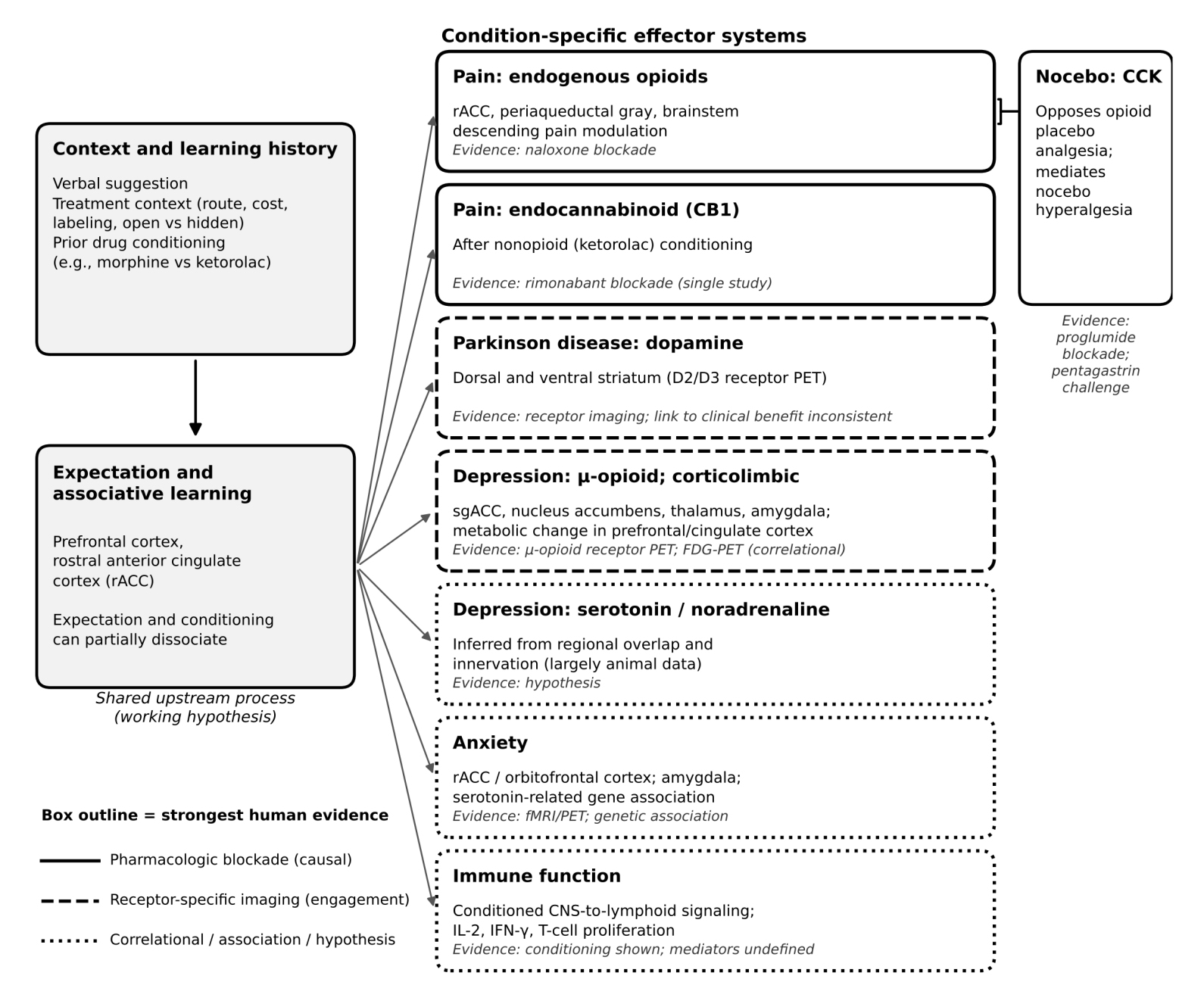 Figure 1. Working model of neurochemical substrates of placebo and nocebo effects.
For many conditions in which placebo response rates are clinically substantial, such as chronic fatigue, irritable bowel syndrome, and subjective symptom burden in general, no single neurochemical substrate has been identified, and part of the observed ‘placebo response’ in clinical trials is not due to a straightforward biologic effect. Several other contributors need to be considered when interpreting clinical trial data: regression to the mean—patients typically enroll in trials during symptom flares, and some improvement is expected on statistical grounds alone, independent of any intervention; reporting and demand-characteristics—participants who know they are receiving a treatment, may adjust how they report symptoms without any underlying physiologic change, which inflates apparent placebo response for subjective outcomes far more than for objective ones such as tumor size, viral load, or wound closure rate; and natural history and concurrent care—trial participation often comes with increased clinical attention, which can independently affect outcomes through non-specific therapeutic alliance effects that are difficult to disentangle from a ‘true’ placebo effect [42].
Thus, the evidentiary emphasis on the mechanisms reviewed above is uneven by evidence rather than by oversight: pain is amenable to pharmacologic blockade studies because well-characterized antagonists exist, and pain and Parkinson disease both have receptor-level in vivo imaging measures (opioid or dopamine receptor availability). Depression now has one receptor-specific molecular imaging study [33] but no blockade studies, and the central mediators of conditioned immune effects in humans remain largely undefined, so these mechanistic accounts are at present supported more by correlational, associative, or animal evidence than by direct causal pharmacology in humans. Table 1 summarizes the evidence by type, distinguishing pharmacologic blockade, receptor-specific imaging, correlational imaging, and proposed mechanisms.
A related caveat concerns terminology. Many imaging studies, particularly in depression, compare placebo responders with non-responders within a placebo arm [11,12]. Such comparisons describe correlates of the placebo response, which includes regression to the mean and natural history, rather than mechanisms of the placebo effect as defined in Section Introduction [43]. Designs that manipulate expectation or conditioning while holding the inert treatment constant (for example, identical placebos accompanied by different verbal information [33]), or that include a no-treatment control [42], are required before a neurochemical change can be attributed to the placebo effect itself. We have therefore distinguished three levels of evidence throughout: neurochemical engagement (a measurable change in a transmitter system during placebo administration), association with improvement (that change correlates with clinical benefit), and causal mediation (blocking the system abolishes or reduces the benefit). In humans, the third level has been demonstrated only for opioid, endocannabinoid, and CCK involvement in experimental and postoperative pain.
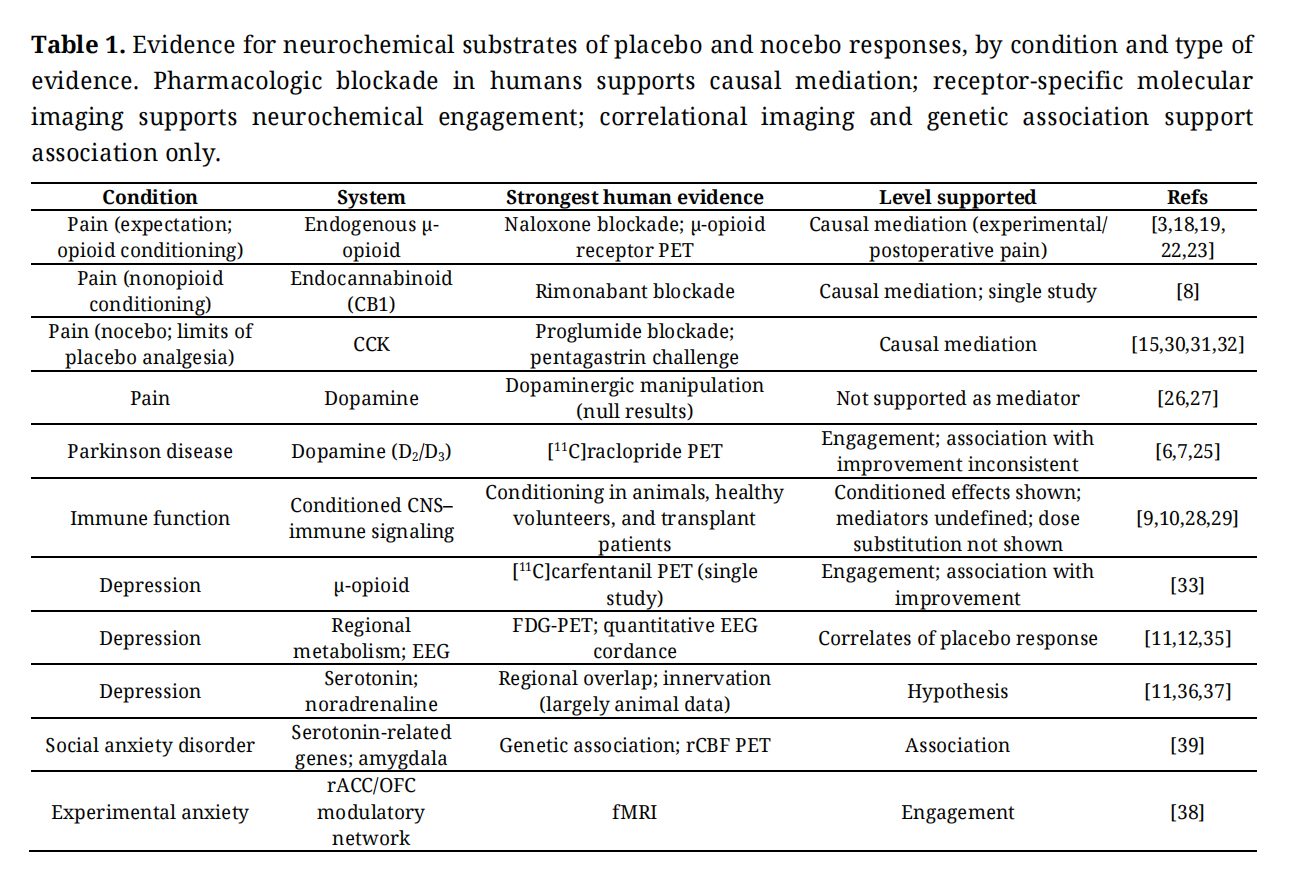 Table 1. Evidence for neurochemical substrates of placebo and nocebo responses, by condition and type of evidence. Pharmacologic blockade in humans supports causal mediation; receptor-specific molecular imaging supports neurochemical engagement; correlational imaging and genetic association support association only.
Recognizing that placebo responses are neurobiologically real, condition-specific phenomena rather than a uniform psychological artifact has several practical implications. In clinical trial design, the magnitude of expected placebo response should inform sample size and design choices differently for pain trials than for, say, oncology trials with objective endpoints, precisely because the former are known to engage identified endogenous neurochemical systems, whereas placebo effects on objective endpoints are generally small [42]. This principle is particularly well developed for analgesic trials specifically, where placebo response magnitude is highly variable and systematically influenced by trial-level factors, including the number of treatment arms and study sites, treatment duration, and the specific pain condition [44]. This has implications for trial design beyond simple sample-size adjustment, including minimizing the number of arms and sites, standardizing how expectations are set during informed consent, and considering enriched-enrollment or sequential parallel-comparison designs calibrated to the expected placebo magnitude for the specific pain condition and population under study. In psychiatric drug development specifically, placebo response rates in antidepressant trials are substantial and have increased over time [45], and the overlap between placebo-responsive and medication-responsive neural circuitry in depression has been proposed as a partial explanation [11]. The finding that placebo-induced μ-opioid release predicts subsequent antidepressant response [33] further suggests that placebo responsiveness and drug responsiveness may not be independent, which complicates the assumption of additivity on which placebo-controlled trials rest. In clinical practice, the CCK-nocebo findings provide a mechanistic rationale for care regarding negative framing when communicating about treatment risk, since verbally-induced negative expectation engages a measurable neuroendocrine and neuropeptide cascade capable of independently worsening symptoms [31,32]. Finally, the conditioned-immunosuppression literature has motivated exploratory work on conditioning protocols in chronic immunosuppressive regimens [10]. In renal transplant patients, conditioned responses were elicited in addition to an unchanged maintenance regimen [29]; it has not yet been shown that any portion of a maintenance dose can be substituted with a conditioned placebo without loss of clinical efficacy, and such dose substitution remains investigational and is not standard practice.
For chronic pain specifically, the same biological complexity that makes chronic pain difficult to treat pharmacologically, i.e., multiple, redundant, and mutually reinforcing neural, endocrine, and immune adaptations, also creates multiple candidate entry points for placebo- (or nocebo-) based or -augmenting adjunctive strategies, including open-label placebo administration, conditioning-based dose-extension protocols, and expectation-optimizing framing of active-drug administration [24]. Realizing this potential in practice, however, requires clinical trial and treatment paradigms that treat the placebo response as a partially separable, and potentially harnessable, treatment component rather than as noise to be subtracted from a drug’s apparent effect [24,44].
Several research priorities follow from the evidentiary gaps summarized in Table 1. First, in psychiatry, the most direct next step is pharmacologic challenge: antagonist studies (for example, with an opioid antagonist, given the μ-opioid findings in depression [33]) or neurotransmitter-specific PET during placebo administration could test whether the systems implicated by imaging are necessary for antidepressant or anxiolytic placebo effects. Second, mechanistic studies should use designs that isolate the placebo effect from the placebo response, such as within-subject manipulation of expectation with identical inert treatments [33] or inclusion of no-treatment or waitlist arms [42], so that imaging correlates are not confounded by regression to the mean or natural history. Third, it remains to be determined whether mechanisms identified in acute experimental pain operate in chronic pain and in psychiatric populations [24]. Fourth, the central pathways that link conditioned cues to peripheral immune changes, characterized mainly in rodents, need to be defined in humans, and conditioned dose-reduction strategies need to be tested against clinical, not only immunological, endpoints [29].
For clinical trials, the key considerations concern both design and interpretation. At the design stage, investigators can reduce non-specific variance by standardizing how expectations are set during informed consent and study visits, limiting the number of treatment arms and sites where feasible, and selecting designs suited to conditions with high placebo response, such as sequential parallel-comparison or enriched-enrollment designs, with attention to their respective limitations [44]. Measuring participants’ treatment expectations at baseline, and assessing blinding integrity during the trial, would allow expectation to be modeled as a covariate rather than treated as unexplained variance. At the interpretation stage, the drug–placebo difference should not automatically be equated with the pharmacologic effect of the drug, because the assumption that drug and placebo effects are additive may fail when both act through partially overlapping neurochemical systems, as suggested for opioid analgesia and for depression [11,33]. Reporting placebo-arm outcomes in sufficient detail, ideally alongside a no-treatment comparator where ethically feasible, would allow future meta-analyses to separate placebo effects from other components of the placebo response [42]. For open-label placebo use, mechanistic knowledge of which conditions engage identified neurochemical systems may help set realistic expectations about where benefit is plausible [16].
Finally, some neuromodulatory systems with established roles in pain and affect have not yet been examined in placebo paradigms. Cholinergic signaling, for example, modulates nociception at spinal and supraspinal levels, but to our knowledge no study has pharmacologically manipulated or imaged cholinergic transmission during placebo or nocebo responses in humans, so any cholinergic contribution to placebo effects remains speculative and is a candidate for future investigation.
As a narrative rather than systematic review, this synthesis does not employ a prespecified search protocol, quality-scoring system, or meta-analytic pooling of effect sizes, and is therefore susceptible to selective emphasis on well-known, frequently cited studies. The mechanisms reviewed here are also disproportionately drawn from experimental pain paradigms in healthy volunteers and small clinical samples; thus the extent to which they generalize to chronic clinical populations, to placebo response in real-world practice rather than trial settings, and across the substantial individual variability documented within each mechanism (for example, in dopaminergic placebo response magnitude in Parkinson disease) requires further, larger-scale replication, although a recent chronic-pain-specific synthesis [24] has begun to catalog where acute-pain mechanisms are, and are not, expected to apply to chronic pain populations. Finally, mechanistic evidence for psychiatric disorders other than depression and anxiety is too limited to review separately, although placebo response rates in those trial populations are also clinically important.
The endogenous opioid system was the first, and remains the best-characterized, neurochemical substrate of a placebo effect, but it is only one instance of a broader principle rather than a template that generalizes uniformly. Placebo administration in Parkinson disease is accompanied by striatal dopamine release, demonstrated with receptor-level imaging, although whether that release mediates clinical improvement is not yet established. The endocannabinoid system supplies a second, dissociable analgesic route engaged under specific conditioning histories. Classically conditioned changes in cytokine production and lymphocyte function demonstrate that placebo-like mechanisms extend to objectively measurable immune physiology, not merely to subjective symptom report, although conditioned substitution for active immunosuppressive drug has not been shown to preserve clinical efficacy. Cholecystokinin functions as an antiopioid counterweight that helps explain both the limits of placebo analgesia and a possible mechanism of the nocebo effect. In depression, placebo effects are associated with μ-opioid neurotransmission and with corticolimbic functional changes, whereas a serotonergic–noradrenergic contribution remains a plausible but untested hypothesis. Taken together, the placebo effect is perhaps best understood not as a single mechanism awaiting fuller elucidation, but instead as a spectrum of condition-specific neurobiological phenomena that, as a working hypothesis, share upstream processes of expectation and associative learning.
Not applicable. The study did not involve humans or animals.
Declaration of Helsinki STROBE Reporting GuidelineNot applicable.
No data were generated from the study.
Conceptualization, RBR; Methodology, RBR and JVPJ; Writing—Original Draft Preparation, RBR; Writing—Review & Editing, RBR and JVPJ
The authors report no relevant financial or non-financial conflict of interest.
No funding was received in support of this manuscript.
Claude Sonnet v4.6 was used to assist with the identification and presentation of published literature.
1.
2.
3.
4.
5.
6.
7.
8.
9.
10.
11.
12.
13.
14.
15.
16.
17.
18.
19.
20.
21.
22.
23.
24.
25.
26.
27.
28.
29.
30.
31.
32.
33.
34.
35.
36.
37.
38.
39.
40.
41.
42.
43.
44.
45.
Raffa RB, Pergolizzi JV Jr. Neurochemical Substrates of Placebo Responses: A Narrative Review. J Psychiatry Brain Sci. 2026;11(6):e260018. https://doi.org/10.20900/jpbs.20260018.

Copyright © Hapres Co., Ltd. Privacy Policy | Terms and Conditions


