Location: Home >> Detail
J Psychiatry Brain Sci. 2026;11(4):e260011. https://doi.org/10.20900/jpbs.20260011
 ,
Yifan Zhang 2 ,
Yangyang Lei 2 ,
Jingjing Zhao 3 ,
Chunyu Liu 4,*
,
Yifan Zhang 2 ,
Yangyang Lei 2 ,
Jingjing Zhao 3 ,
Chunyu Liu 4,*
1
2
3
4
*
Background: Bright light therapy (BLT) is an established treatment for depressive symptoms, but its effects on cognitive function in major depressive disorder (MDD) remain incompletely understood. This study investigated whether adjunctive morning blue-enriched BLT is associated with improvements in mood, sleep quality, and spatial working memory in women with MDD.
Methods: In this randomized controlled pilot trial, 42 women with MDD were randomized to receive either adjunctive morning blue-enriched BLT plus fluoxetine (n = 21) or fluoxetine alone (n = 21) for 14 days. Depressive symptoms (HAMD-24) and sleep quality (PSQI) were assessed at baseline, Day 7, and Day 14. Static spatial working memory (SSWM) and dynamic spatial working memory (DSWM) were assessed at baseline and Day 14. Exploratory mediation analyses examined associations among mood, sleep, and cognitive outcomes.
Results: Thirty-nine participants completed the trial and were included in the final analysis. Baseline demographic, clinical, and cognitive measures did not differ significantly between groups (all p > 0.05). Significant group × time interactions were observed for depressive symptoms (HAMD-24: F(1,37) = 9.8, p < 0.01, ηp² = 0.22) and sleep quality (PSQI: F(1,37) = 13.6, p < 0.001, ηp² = 0.27). Between-group differences in depressive symptoms emerged after 1 week of treatment, indicating an earlier antidepressant response in the BLT group. Participants receiving BLT also showed better static spatial working memory performance than controls (SSWM: F(1,37) = 13.5, p < 0.001, ηp² = 0.28), whereas no significant group difference was observed for DSWM. Exploratory mediation analysis suggested that improvement in sleep quality was statistically associated with the relationship between early mood improvement and subsequent gains in SSWM performance (indirect effect = −0.38, 95% CI [−0.63, −0.03]).
Conclusions: Adjunctive morning blue-enriched BLT was associated with an earlier antidepressant response, greater improvement in sleep quality, and enhanced static spatial working memory in women with MDD. Improvements in sleep quality may contribute to the association between early mood improvement and subsequent cognitive benefit. These findings are preliminary and warrant confirmation in larger placebo-controlled trials incorporating objective sleep, circadian, and cognitive measures.
Light is essential for human physiology. In humans, light serves not only as an essential element for vision but also plays a vital role in various physiological processes [1]. These processes include the regulation of the sleep-wake cycle, hormone secretion, thermoregulation [2], heart rate, behavior, mood [3] and cognition [4]. These are collectively known as non-image-forming (NIF) effects [5]. Since the discovery of intrinsically photosensitive retinal ganglion cells (ipRGCs) in 2002, the NIF effects on humans have received substantial attention. BLT has been used to improve several physiological and behavioral outcomes, including sleep and mood, and may also influence cognitive function. Multiple meta-analyses and clinical trials have demonstrated the efficacy of BLT in improving these processes.
Light exposure can help regulate circadian rhythms and improve certain sleep disturbances. Light acts as an external "zeitgeber," influencing the expression of internal rhythms, thereby significantly affecting the sleep-wake cycle [6]. Exposure to light during evening hours shifts the circadian system towards later hours, while exposure during morning hours shifts the circadian timing earlier [7]. Sleep problems can arise or be alleviated due to light exposure. Inappropriate lighting conditions can interfere with sleep, whereas appropriately timed light exposure may alleviate certain sleep disturbances. Van Maanen et al. found BLT to be effective in general sleep problems (Hedges' g = 0.39) and for circadian rhythm sleep disorders (g = 0.41), with a strong effect on insomnia (g = 0.47). Additionally, BLT has been shown to enhance sleep continuity (effect size, ES = −0.23, p = 0.000) and advance delayed sleep timing (ES = −0.34, p = 0.010), suggesting its potential to improve sleep regulation [8].
The relationship between light and emotion has been extensively studied. The connection between BLT and mood was first identified in 1984 when Rosenthal et al. found a highly negative correlation between the number of individuals with MDD and the average duration of daylight during that month (correlation coefficient, r = −0.87, p < 0.001) [9]. A similar strong correlation was observed between the percentage of individuals with depressive disorders and the mean daytime temperature (r = −0.98, p < 0.001). These findings laid the foundation for subsequent development of BLT.
In studies examining the therapeutic effects of BLT on depressive mood, it has been established as the first-line treatment for seasonal affective disorder [10]. Compared with fluoxetine monotherapy, adjunctive BLT exhibits a faster antidepressant effect and a more rapid decline in Hamilton Depression Rating Scale scores [11]. Furthermore, BLT has been shown to be as effective as conventional antidepressants in improving depressive symptoms [12]. These findings underscore the potential of BLT as a non-pharmacological intervention with significant therapeutic benefits. BLT is described as a safe, well-tolerated, non-pharmacological intervention for mood disorders that is particularly effective when combined with medication. Additionally, BLT has been shown to enhance depression remission rates in both seasonal and non-seasonal depression models [13,14]. For patients with moderate to severe depressive disorders, BLT has demonstrated comparable efficacy to antidepressant therapy, suggesting its potential as an adjunctive treatment.
The effects of light on circadian rhythms and cognitive function are well-documented. Circadian rhythmicity influences numerous cognitive processes, including attention, executive functions, and memory [15]. Huang et al. reported that BLT enhances spatial memory in rodents through alterations in functional connectivity within the default mode network, frontoparietal network, salience network, and sensorimotor network [16]. However, findings obtained from rodent experiments cannot be directly extrapolated to human populations, and further human clinical trials are required to verify such effects in humans. Animal studies have also shown that bright light enhances spatial memory in rodents [16], while dim and irregular lighting conditions impair spatial memory [17]. These findings highlight the potential of light therapy in cognitive enhancement. Recent work by Elliott et al. [18] has also shown that BLT may be associated with improvements in cognitive function in individuals recovering from concussion. Although this research focuses on a different population, there is meaningful overlap with depressive disorders in terms of sleep impairment and cognitive dysfunction, supporting the relevance of bright light for cognitive outcomes across conditions.
This randomized, controlled, single-blind pilot trial was conducted with outcome assessors and data analysts masked to group allocation. Forty-two women diagnosed with MDD were randomly assigned to either the experimental group (BLT plus fluoxetine group) or control group (fluoxetine alone). Throughout the trial period, we collected sleep and depressive-symptom measures at Days 0, 7, and 14, as well as cognitive function data from spatial working memory at Days 0 and 14 for all participants. Furthermore, by analyzing these data, we explored the statistical correlational pathways among mood, sleep, and cognitive outcomes via exploratory mediation analysis. These preliminary observations may help identify potential correlational pathways linking BLT to mood, sleep, and cognitive outcomes.
This trial was conducted at the Mental Health Center of Hunan Provincial Second People’s Hospital between October 2020 and March 2021.
A total of 42 female patients with MDD were enrolled and randomly allocated in a 1:1 ratio to receive either adjunctive BLT plus fluoxetine (experimental group, n = 21) or fluoxetine monotherapy (control group, n = 21). The randomization sequence was generated by an independent researcher using a computerized random-number generator. Treatment allocation was concealed using sequentially numbered, sealed opaque envelopes until enrollment and assignment were completed. All enrolled participants were premenopausal women without hormonal contraceptive use.
Sample size calculation was performed using G*Power based on previously reported effect sizes for BLT in MDD, with α = 0.05 and a target statistical power of 0.85. The mediation analysis followed Hayes (2012) [19]. The analysis indicated that a minimum sample of 36 participants would provide 85% statistical power. Considering potential attrition, 42 participants were enrolled.
Because participants received visibly different interventions, participant blinding was not feasible. Outcome assessors and data analysts remained blinded throughout the study.
The primary outcome was change in depressive symptoms as measured by HAMD-24 across the 14-day intervention period. Secondary outcomes included PSQI scores and performance on the SSWM and DSWM tasks. Mediation analyses were considered exploratory.
Ethical StatementThe study protocol was approved by the institutional ethics committee (Hunan Provincial Second People's Hospital Institutional Ethics Committee; IRB approval #2020K36; July 14, 2020) and complied with the Declaration of Helsinki. Written informed consent was obtained from all participants prior to enrollment and baseline assessment.
Inclusion Criteria and Exclusion Criteria Inclusion criteriai.
ii.
iii.
iv.
v.
vi.
i.
ii.
iii.
iv.
v.
Depressive symptoms were assessed using the 24-item Hamilton Depression Rating Scale (HAMD-24) [20]. Sleep quality was evaluated using the Pittsburgh Sleep Quality Index (PSQI) [21].
The SSWM and DSWM tasks were developed by our research team and have been used in previous cognitive studies (https://github.com/ByteCascade221/MemoryTest). Participants completed a standardized practice session before baseline assessment to ensure task comprehension. A predefined data-quality criterion was applied. Participants with invalid responses or task completion failure in over 80% of trials were excluded from cognitive analyses. Data exclusion was determined before statistical analysis and without knowledge of treatment assignment.
Static spatial working memory (SSWM)Participants memorized the spatial location of a target point relative to a reference frame and subsequently reproduced the position using keyboard controls (‘i,’ ‘j,’ ‘k,’ and ‘l’ for up, down, left, and right, respectively) following a brief blank-screen interval. Memory accuracy was quantified as the Euclidean distance between the target location and participant response.
To prevent the use of external spatial strategies, the frame position differed between encoding and retrieval phases.
Dynamic spatial working memory (DSWM)The DSWM task was adapted from the SSWM paradigm with increased task complexity. The frame boundaries were represented by moving dots rather than static solid lines, thereby increasing dynamic spatial processing demands.
Intervention ProtocolFollowing baseline assessment, which included demographic information and IQ measured using Raven’s Standard Progressive Matrices, participants underwent group-specific interventions.
Fluoxetine treatmentFluoxetine, a first-line selective serotonin reuptake inhibitor (SSRI) with well-documented efficacy and safety in adult women with major depressive disorder, was selected as the study medication. Fluoxetine is not generally considered to produce major alterations in circadian phase, although it may transiently affect sleep architecture during the initial treatment period [22,23], making it suitable for use in studies investigating interventions affecting sleep or circadian processes.
Although fluoxetine may affect sleep during early treatment, all participants were fluoxetine-naïve and the short study duration reduced the likelihood of substantial confounding. To ensure methodological consistency between groups, a fixed-dose regimen was used. All participants were fluoxetine-naïve and initiated a standardized dosing regimen: 20 mg daily (Days 1–3), titrated to 40 mg daily from Day 4 onward, administered each morning. The control group received fluoxetine monotherapy alone (Shanghai Sino-West Pharmaceutical).
Bright light therapyIn addition to fluoxetine treatment, participants in the experimental group received adjunctive BLT under clinical supervision.
BLT was administered daily between 07:00 and 09:00 for 30 mins per session over 14 consecutive days. The light therapy device used in this study was a ‘NEW SUN’ health energy lamp, with dimensions of 180 × 198 × 40 mm (Beijing Xintaiyang Health Technology Co., Ltd., Guangzhou, Guangdong, China). The light source was mounted vertically 30 cm anterior to participants’ eyes. Spectral characterization was performed via an OHSP-350FA spectroradiometer (Hangzhou HOPOO Light & Color Technology, Hangzhou, China), producing a mean illuminance of 500 lux with a dominant peak at 500 nm and an effective spectral bandwidth of 480–530 nm. This low-intensity blue-enriched light regimen was selected based on previous studies demonstrating its comparable therapeutic effects to high-intensity full-spectrum light for mood and cognitive improvement [24,25].
The fixed morning treatment window was selected to maximize circadian phase advancement and reduce interindividual variability in circadian response. Participants were permitted to read or listen to music during treatment sessions but were instructed to remain awake and avoid prolonged eye closure.
Before intervention, all participants received standardized one-on-one instruction regarding BLT procedures, device operation, treatment timing, medication schedule, and study precautions.
Treatment adherence for both medication and light therapy was recorded daily by trained nursing staff.
Statistical AnalysisAnalyses were conducted using SPSS version 25.0. Continuous variables are presented as mean ± standard deviation (SD). The primary outcome was change in depressive symptoms measured by the HAMD-24. Secondary outcomes included sleep quality (PSQI) and spatial working memory performance (SSWM and DSWM). Mediation analyses were considered exploratory.
Repeated-measures analysis of covariance (RM-ANCOVA) was used to examine the effects of group (BLT plus fluoxetine vs fluoxetine alone) and time on outcome measures, with age and IQ included as covariates. Planned linear contrasts were applied to assess temporal changes, and the reported F statistics correspond to the linear trend component across time. When significant main effects or interactions were observed, Bonferroni-adjusted post hoc pairwise comparisons were performed. All analyses were conducted on participants who completed the study protocol (per-protocol analysis). All statistical tests were two-tailed, and statistical significance was set at p < 0.05. SSWM and DSWM were analyzed using repeated-measures analysis of covariance (RM-ANCOVA) with group as the between-subject factor and time (baseline and week 2) as the within-subject factor, adjusting for age and IQ.
Exploratory mediation analyses were performed using PROCESS macro version 4.0 (Model 4; Hayes, 2012). Indirect effects were estimated using 5,000 bias-corrected bootstrap resamples. Mediation effects were considered statistically significant when the 95% bootstrap confidence interval did not include zero.
Forty-two participants were randomized, with 21 assigned to each group. Two participants in the BLT group withdrew before study completion. One participant in the control group was excluded because cognitive task data failed predefined quality-control criteria. Final analyses included 19 participants in the BLT group and 20 participants in the control group. There were no significant baseline differences between groups in scale scores or cognitive task performance (Table 1). Adherence rates across all subjects were consistently high with minimal variability. Accordingly, only age and IQ were adjusted as covariates in the final statistical analyses to eliminate confounding effects.
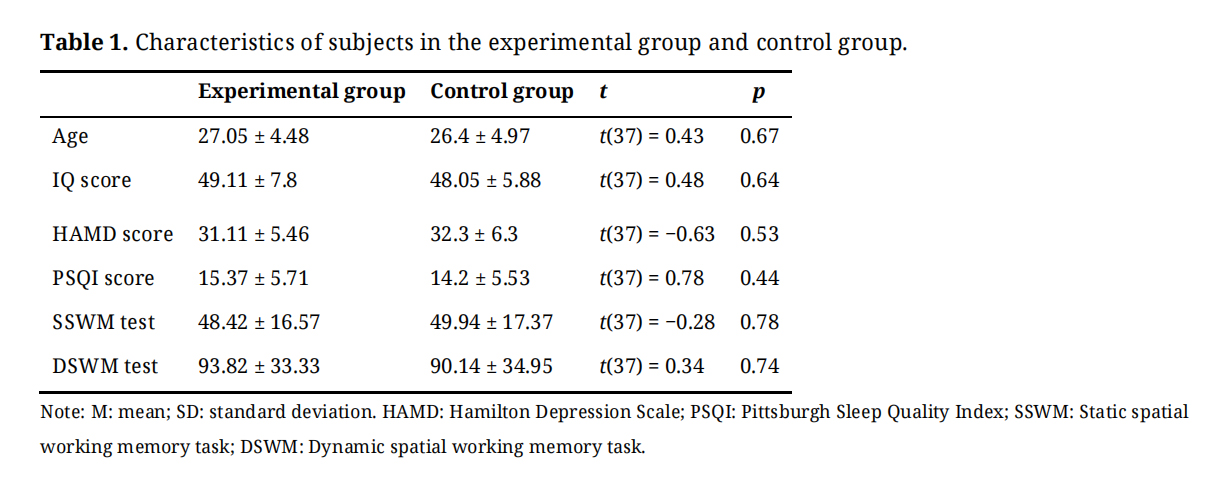 Table 1. Characteristics of subjects in the experimental group and control group.
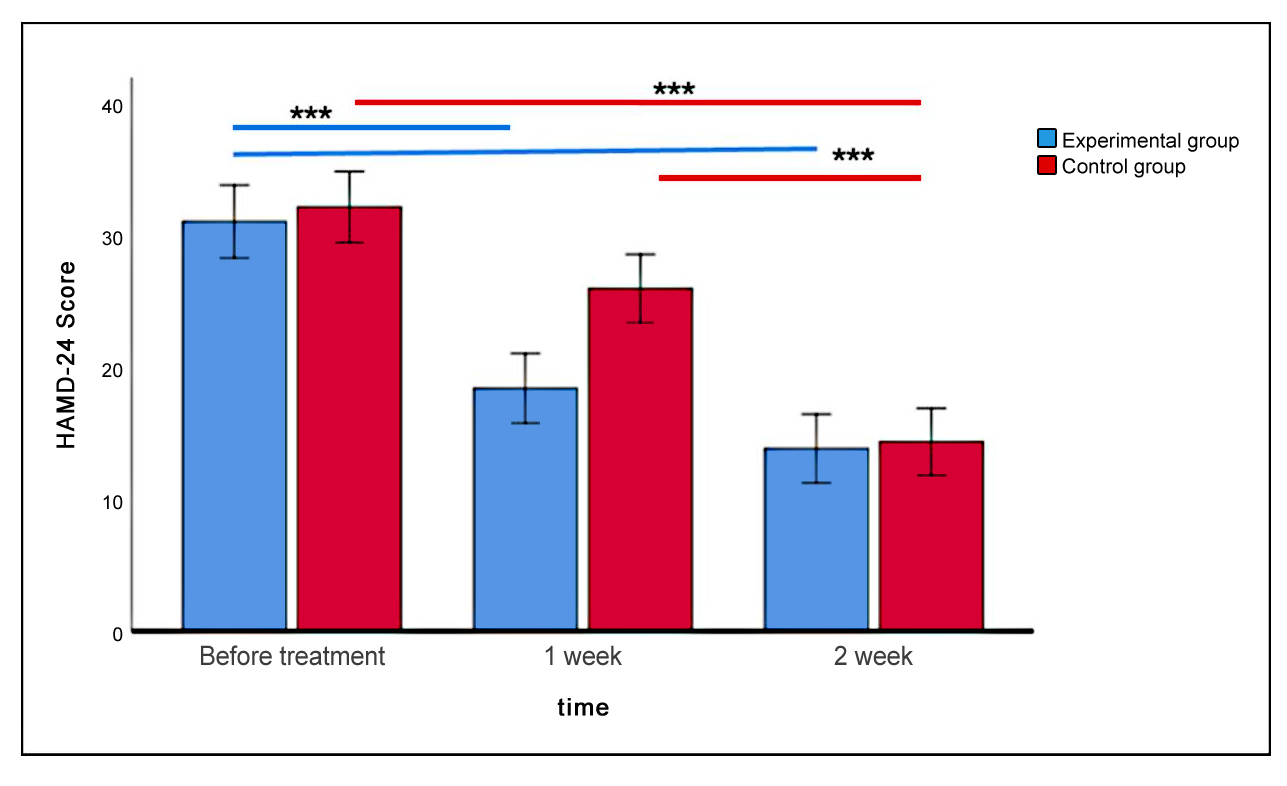 Figure 1. Repeated-measures ANCOVA of HAMD-24 in the experimental and control groups at different treatment times. ***p < 0.001.
For depressive symptoms, there was a significant difference between the two groups, F(1, 37) = 7.44, p < 0.05, ηp2 = 0.17. A significant overall main effect of time was observed across the three assessment points. The linear trend analysis for symptom changes was not significant( F(1, 37) = 0.57, p = 0.57, ηp2 = 0.02). In the experimental group, HAMD-24 scores differed significantly between baseline and week 1 and between baseline and week 2. In the control group, significant differences were observed between baseline and week 2 and between week 1 and week 2. The interaction between group and treatment time was also significant, F(1, 37) = 9.8, p < 0.01, ηp2 = 0.22. Specifically, at 1 week of treatment, HAMD-24 scores decreased more significantly in the experimental group (p < 0.001). Both groups exhibited comparable reductions in depressive symptoms at post-intervention. However, the experimental group showed faster clinical improvement, with a significantly greater reduction in symptoms within the first week. HAMD-24 scores in the control group did not decline significantly until week 2. All reported significant post-hoc comparisons remained significant after Bonferroni correction for multiple testing. The changing trajectories of depressive symptoms across time are presented in Figure 1.
Effects of BLT intervention on sleep qualityFor sleep quality, the main effect of time was significant F(1, 37) = 6.61, p < 0.01, ηp2 = 0.1. Additionally, the interaction between group and time was significant, F(1, 37) = 13.6, p < 0.001, ηp2 = 0.27. Further analysis showed that the PSQI scores in the experimental group decreased significantly from baseline, whereas no significant differences were observed between baseline and post-treatment time points in the control group. Relative to the fluoxetine-only group, adjunctive BLT was associated with significantly greater improvements in self-reported sleep quality. All reported significant post-hoc comparisons remained significant after Bonferroni correction for multiple testing. The changing trajectories of sleep quality across time are presented in Figure 2.
Figure 2. Repeated-measures ANCOVA of PSQI in the experimental and control groups at different treatment times. ***p < 0.001.
A repeated-measures analysis of covariance (RM-ANCOVA) with group and time as factors was conducted. Results indicated a significant main effect of group F(1,37) = 4.76, p < 0.05, ηp2 = 0.12). However, treatment time was not significant F(1,37) = 0.14, p > 0.05, ηp2 = 0.01). A significant interaction effect between group and time was detected F(1,37) = 13.5, p < 0.001, ηp2 = 0.28. The experimental group showed a lower Euclidean error distance, indicating better spatial cognitive performance. Post hoc comparisons indicated that SSWM error decreased significantly from baseline to post-treatment in the BLT group, whereas no significant within-group change was observed in the control group. All reported significant post-hoc comparisons remained significant after Bonferroni correction for multiple testing. The group differences in SSWM performance over time are visualized in Figure 3.
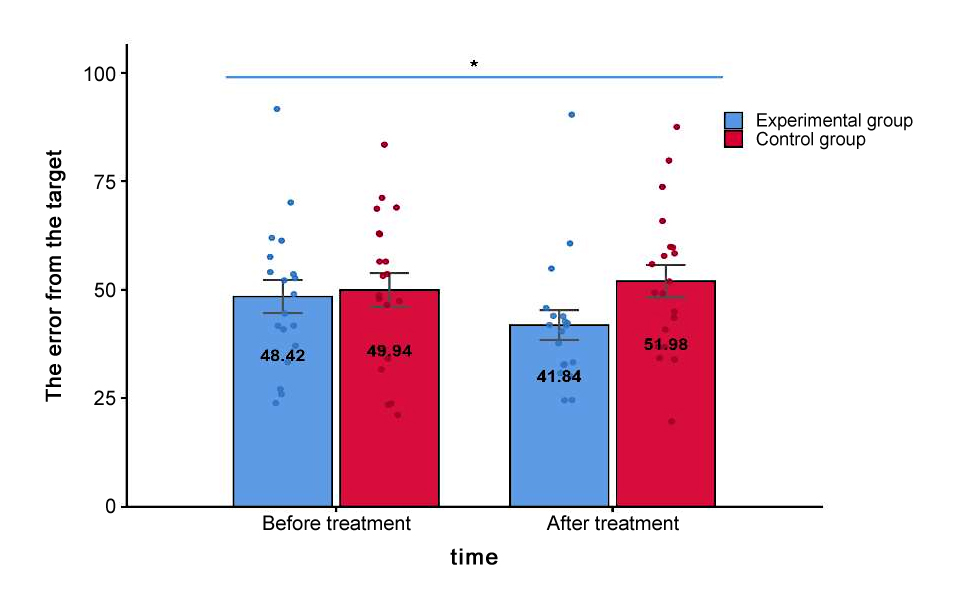 Figure 3. Repeated-measures ANCOVA of static spatial working memory (SSWM) across study periods. Data represent mean ± SEM; *p < 0.05.
For the DSWM task, treatment time showed a marginally significant effect F(1,37) = 3.49, p = 0.07, ηp2 = 0.09, but the group × time interaction was not significant. The group differences in DSWM performance over time are visualized in Figure 4.
Exploratory mediation analysis of sleep quality mediating depressive symptoms and SSWMTo explore potential relationships among mood, sleep, and cognition, an exploratory mediation analysis was conducted using PROCESS v4.0 (Model 4) with 5000 bootstrap resamples. Changes in depressive symptoms from baseline to week 1 were defined as the independent variable (X), changes in sleep quality from baseline to week 1 as the mediator (M), and change in SSWM from baseline to week 2 as the dependent variable (Y). Age and IQ were analyzed as covariates.
Results indicated a significant overall model, F(4,34) = 8.07, p < 0.01. The total effect of week 1 mood change on week 2 SSWM performance was significant (c = −0.86, p < 0.05), whereas the direct effect controlling for sleep change was not significant (c′ = −0.48, p = 0.20). The indirect effect through sleep change was significant (a*b = −0.38, 95% CI [−0.63, −0.03]), indicating that early changes in sleep quality statistically mediated the relationship between week 1 mood improvement and subsequent SSWM performance. To visualize the mediating pathway of sleep quality, the conceptual mediation model and corresponding path coefficients are presented in Figure 5.
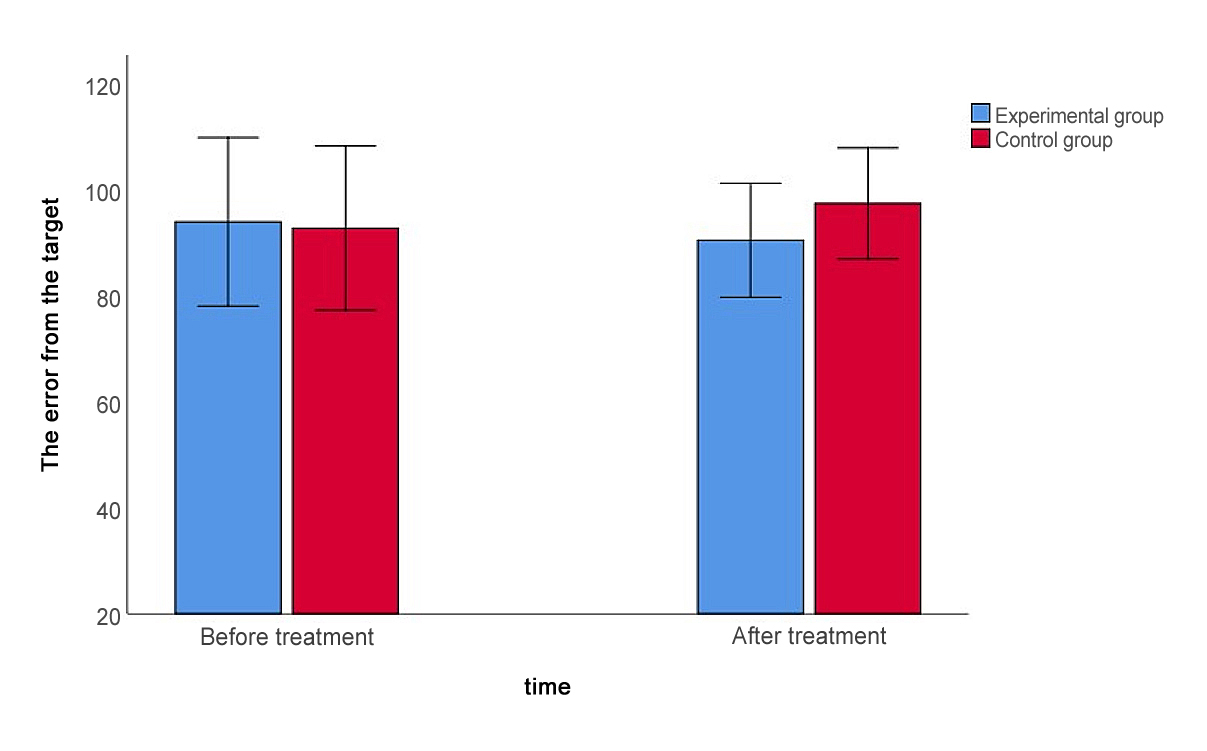 Figure 4. Repeated-measures ANCOVA of dynamic spatial working memory (DSWM) across study periods.
All reported coefficients are unstandardized. Bootstrap confidence intervals not including zero indicate a statistically significant indirect effect.
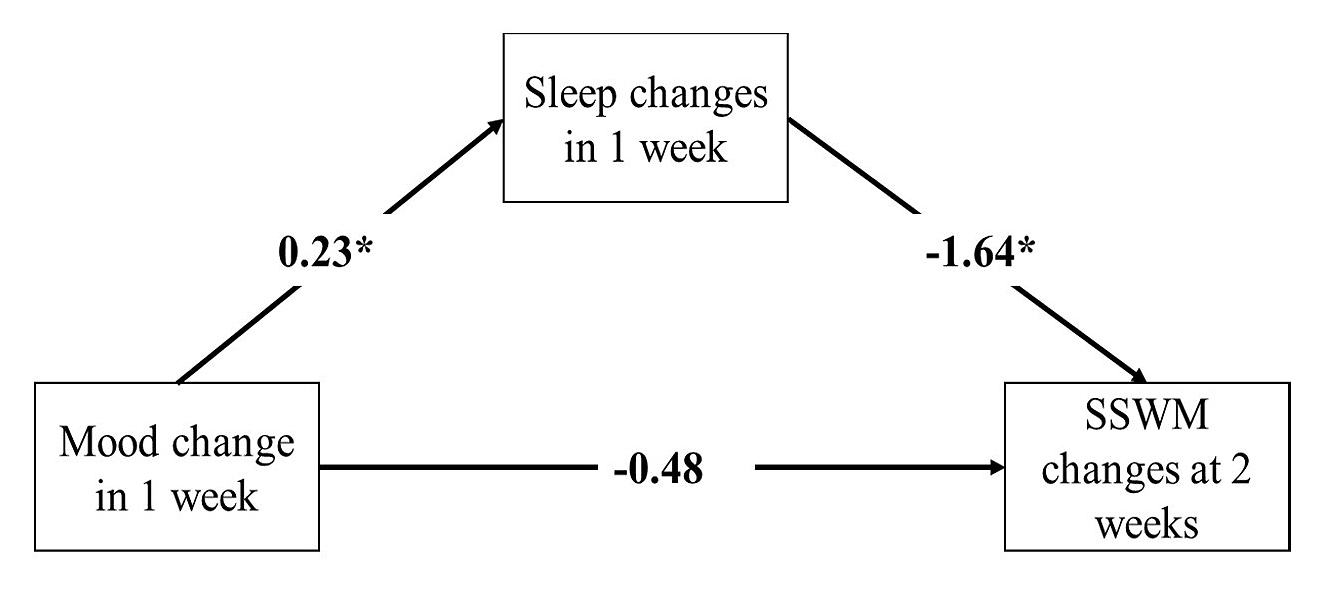 Figure 5. Relationship between mood changes, sleep changes, and static spatial working memory (SSWM) changes. *p < 0.05.
No serious adverse events were reported during the study period. Participants generally tolerated the intervention well. Mild transient discomfort (e.g., eye strain, headache, or sleepiness) was monitored and did not result in treatment discontinuation.
Depressive symptoms decreased significantly in both treatment groups. Notably, BLT was associated with faster early symptom reduction, with effects becoming apparent within the first week, faster than fluoxetine monotherapy. Furthermore, this study also found that BLT may improve sleep quality in women with MDD. We further demonstrated that adjunctive BLT was associated with improved performance on the SSWM task, and these improvements appeared to be associated with improved sleep quality in patients with depressive disorders. Specifically, exploratory analyses suggested that improvements in sleep quality were statistically associated with subsequent improvements in SSWM performance. These findings should be considered preliminary and hypothesis-generating.
Adjunctive BLT Was Associated with Faster Mood Improvement and Better Self-Reported Sleep QualityThe experimental group experienced significant reductions in HAMD-24 scores (p < 0.001). This finding aligns with previous studies demonstrating the effectiveness of BLT in reducing depressive symptoms [26]. BLT combined with medication may accelerate early symptom improvement relative to fluoxetine monotherapy. The sleep-wake cycle, as a manifestation of the circadian rhythm, is influenced by light [27,28]. In this study, we found that BLT was associated with improvements in sleep quality among patients with depressive disorders. This conclusion is consistent with previous research [29]. In addition, the effects of BLT on sleep were evident within the first week. Adjunctive BLT was associated with more rapid improvement in self-reported sleep quality among women with MDD. Consistent with previous findings, fluoxetine can transiently disrupt sleep continuity and suppress REM sleep during the early adjustment period, without significantly altering overall circadian rhythms. Such effects may mask potential sleep improvements in patients receiving fluoxetine monotherapy, which explains why no significant sleep improvement was observed in the control group.
Adjunctive BLT Was Associated with Improved SSWMAdjunctive BLT was selectively associated with improved static spatial working memory (SSWM), with no significant effect observed for dynamic spatial working memory (DSWM). To our knowledge, few human studies have specifically investigated the impact of adjunctive BLT on static spatial working memory in women with MDD. Related findings have been reported in rodent models, in which light exposure modulated spatial learning and memory [16,30]. However, no significant interaction between group and treatment time was observed for the DSWM task. This might be attributable to the complexity of DSWM.
Compared to the SSWM test, the DSWM test requires greater cognitive resources for constructing complex dynamic spatial representations, including scanning, encoding, and internal processing of stimuli.
The significant group×time interaction for SSWM was driven by a significant reduction in Euclidean error distance in the BLT group after treatment, while the control group showed no significant change from baseline. Post-hoc analyses confirmed that the two groups had comparable performance at baseline, indicating that the observed group difference emerged only after treatment.
These findings are also consistent with a growing body of literature indicating that bright light can enhance cognitive function in other populations characterized by sleep disturbance and cognitive impairment, such as individuals recovering from concussion [18,31].
Exploratory Mediation Analysis Linking Sleep-Quality Change and SSWM ChangeAnimal experiments have shown that emotional disturbances precede the onset of cognitive problems [16]. This evidence supports our model in which mood improvement precedes cognitive improvement.
Our findings indicate that changes in depressive symptoms during the first week of BLT may be associated with improved SSWM performance at week 2 by influencing early changes in sleep. Exploratory analysis indicated that early improvements in sleep were statistically associated with subsequent gains in SSWM, linking mood amelioration to cognitive outcomes. In other words, patients with depressive disorders who received BLT exhibited improved mood and spatial cognition, which were associated with better sleep quality.
Previous studies have supported this framework from various perspectives. For example, bright light may modulate neurobehavioral function through non-visual pathways, in which circadian rhythms play a central role. Circadian rhythms involve multiple brain regions, including limbic regions, the thalamus, hippocampus, and amygdala, as well as systems such as monoaminergic neurotransmission and the hypothalamic–pituitary–adrenal axis, all of which are relevant to emotional and cognitive processes [32]. Taken together, these observations suggest that BLT may be associated with improvements in cognitive function among patients with MDD. These potential mechanisms remain speculative because circadian markers, neuroimaging measures, hormonal indices, and electrophysiological assessments were not directly evaluated in the present study.
LimitationAlthough the present study provides preliminary evidence supporting adjunctive bright light therapy in women with MDD, several limitations should be considered. First, this was a single-center pilot study with a relatively small sample size and a short intervention duration, which limits the generalizability of the findings. Second, the absence of a placebo light condition prevents full separation of specific effects of light exposure from nonspecific effects such as expectancy, behavioral activation, and treatment context. Third, cognitive performance was assessed only at baseline and post-intervention. Although the inclusion of a control group helps to reduce potential confounding from repeated testing, practice effects cannot be fully excluded. Future studies should incorporate alternative task versions and additional follow-up time points to better characterize the temporal stability of cognitive changes. Fourth, sleep outcomes were based on self-reported measures without objective assessments such as actigraphy or polysomnography, which may limit the precision of sleep-related conclusions. Fifth, menstrual cycle phase was not systematically controlled. Variables related to sex hormones in the future should be included in the statistical analysis. In addition, this study relied solely on per-protocol analysis. The absence of intention-to-treat analysis represents a limitation that may affect the stability of the study outcomes.
Finally, while exploratory analyses suggested potential associations among mood, sleep, and cognitive outcomes, these findings should be interpreted cautiously given the limited sample size and the preliminary nature of the mediation analysis.
In conclusion, in this small randomized study of women with MDD, adjunctive morning blue-enriched bright light therapy was associated with faster early reduction in depressive symptoms, greater improvement in self-reported sleep quality, and improved performance on a static spatial working memory task compared with fluoxetine alone. These findings are preliminary and should be interpreted cautiously given the small sample size, short study duration, and absence of a placebo light control condition. Larger placebo-controlled trials incorporating objective sleep, circadian, and cognitive measures are needed to confirm these observations.
The datasets analyzed during the current study are available from the corresponding author upon request.
Ning Yuan, Yifan Zhang, Chunyu Liu designed the study. Yifan Zhang performed the experiments and collected clinical data. Yangyang Lei and Jingjing Zhao performed statistical analyses. Chunyu Liu supervised the whole study and revised the manuscript. All authors read and approved the final manuscript.
The authors declare that they have no conflicts of interest.
This research was funded by the Hunan Provincial Natural Science Foundation (grant no. 2023JJ60293), the High-level Talent Major Research Project of Hunan Provincial Health Commission (grant no. 20230412), the National Clinical Key Specialty Major Research Project of Hunan Province (grant no. Z20231222017A01), the University-Hospital Joint Research Fund of Hunan University of Chinese Medicine (grant no. 2024XYLH195), and the Postgraduate Innovation Project of Hunan University of Chinese Medicine (grant no. 2024CX144).
1.
2.
3.
4.
5.
6.
7.
8.
9.
10.
11.
12.
13.
14.
15.
16.
17.
18.
19.
20.
21.
22.
23.
24.
25.
26.
27.
28.
29.
30.
31.
32.
Yuan N, Zhang Y, Lei Y, Zhao J, Liu C. Adjunctive Morning Blue-Enriched Bright Light Therapy Is Associated with Improved Mood, Sleep, and Static Spatial Working Memory in Women with Major Depressive Disorder. J Psychiatry Brain Sci. 2026;11(4):e260011. https://doi.org/10.20900/jpbs.20260011

Copyright © Hapres Co., Ltd. Privacy Policy | Terms and Conditions


