Location: Home >> Detail
J Sustain Res. 2026;8(3):e260080. https://doi.org/10.20900/jsr20260080
 ,
Katie McIntyre 1 ,
Steven Underhill 2 ,
Morgan Miles 3 ,
Melanie L. Harris 2
,
Katie McIntyre 1 ,
Steven Underhill 2 ,
Morgan Miles 3 ,
Melanie L. Harris 2
1
2
3
*
Background: A renewed focus on waste management and waste-repurposing strategies has sparked interest in the circular economy and sustainable development. This transition reflects a growing movement across industries and among entrepreneurs to adopt sustainable practices while enhancing efficiency throughout the life cycle of goods and services. As consumer awareness of the origins of their purchases increases, demand for transparency and accountability in business practices rises. In Oceania, particularly the Pacific Islands, limited land, rising sea levels, and high import dependence pose challenges for recycling and sustainability. This research examines how various stakeholders adopt sustainable practices to manage resources responsibly and achieve socially aligned outcomes. Methods: Following the PRISMA protocol, the study systematically reviews circular practices and innovations in Oceania’s food and agribusiness sector, identifying existing gaps and potential future research opportunities. An illustrative case study highlights how entrepreneurs in this sector are effectively meeting social, environmental, and business objectives in a global market. Results: The study highlights strategic waste management initiatives, business model adaptation, and the creation of new markets and products while maintaining the integrity of core operations. Our findings show that entrepreneurial activities offer social and economic benefits that extend beyond local communities, creating a positive ripple effect. Conclusions: This research enhances our understanding of circular entrepreneurial behavior as community-driven activities in environmental development, highlighting that such behavior often grows with experience. By examining how entrepreneurs balance economic needs with other demands, we gain insight into their motivations for adopting circular practices. The study shows that reusing, repurposing, redesigning, and reducing waste can improve profits and expand markets by treating waste as a valuable resource. We conclude with recommendations for industry and government support mechanisms to foster progress in this area.
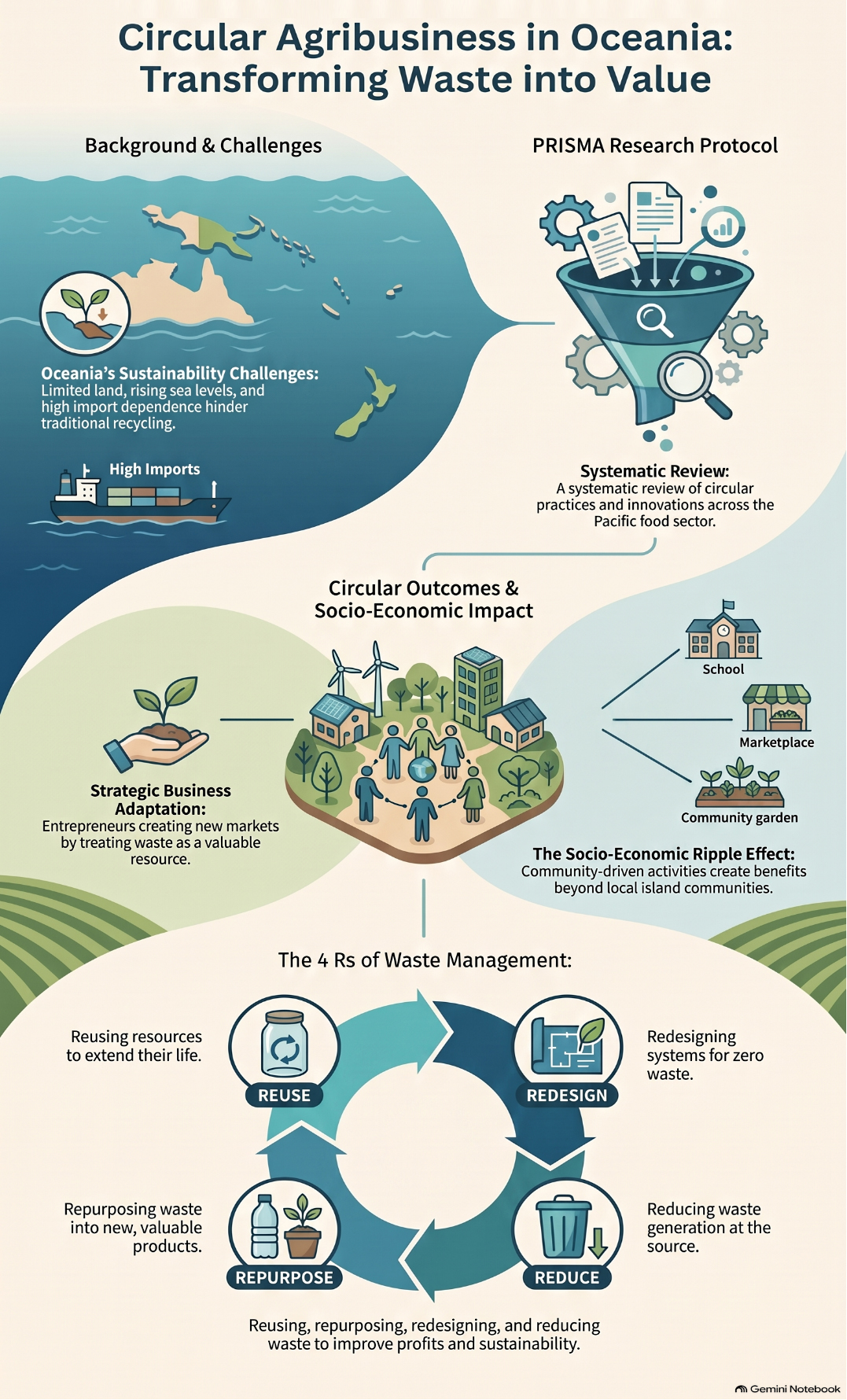
Food waste has become an increasing area of concern globally for policymakers, scholars, and local and international organizations [1]. Research suggests that approximately one-third of the food produced for human consumption is discarded as food waste [2–4]. Food waste refers to materials intended for human consumption that are discarded, contaminated, lost, or degraded [5]. It is a global issue that occurs at all stages of the food supply chain [1]. Attention to food waste has increased because of rising food insecurity and its significance, as highlighted by the United Nations, which has set a global goal to reduce food waste by half by 2030 [4].
Food insecurity is a primary concern in discussions of food waste, as limited access to nutritious, affordable food is associated with poor health outcomes, including an increased risk of serious diseases [6]. Additionally, vulnerable groups such as children bear the greater burden, with food insecurity impacting children’s physical, cognitive and psychosocial development [7]. Minority groups are more likely to experience food insecurity and under-resourced food environments [6]. Globally, food insecurity is increasing [8], with limited progress in reducing food waste [9] and achieving food security, as mandated by the United Nations (SDG Target 2.1) [10]. Recent findings suggest that, due to environmental challenges such as global warming, the probability and magnitude of food insecurity are increasing over time [11].
The growing complexity of food waste and food insecurity places a disproportionate burden on Pacific Island nations, which increasingly rely on global food regimes that shape consumption patterns, food availability, and population health [12–14]. Climate change and the reduction in arable land (e.g., rising sea levels, soil loss, etc.) are increasing the need for food imports [13], while population growth exacerbates the food deficit [12]. Further, global crises such as COVID-19 [15] place additional strain on already stretched Oceania food systems, reducing access to international markets and further straining these systems [16]. Consequently, island nations face a greater burden of food insecurity and nutrition-related health conditions [17]. To address these challenges, Oceania, and especially island nations, are developing innovations along the food supply chain to ensure food security and reduce the occurrence and severity of nutrition-related diseases. The term “innovation” can encompass various approaches. For instance, it may involve a Pacific government enhancing current agricultural practices by transitioning from semi-subsistence farming to commercial-scale systems. This may include collaborating with researchers and providing financial support for these initiatives. Alternatively, innovation could focus on diversification, such as increasing the range of locally grown crops to replace imports. However, one consequence of this diversification is a potential increase in food waste. Locals may not consume or buy unfamiliar crops, creating a misalignment between supply and demand [2,16,17].
Given the importance of food security and the need to reduce food waste, particularly in Oceania, this paper presents a systematic literature review (SLR) identifying current innovations to reduce waste. The SLR was conducted to ensure a rigorous, robust search of the literature on food waste in Oceania [18]. This systematic approach ensures that any future research builds on previous findings and clarifies ongoing discussions in food waste research [19]. A rigorous literature review on food waste in Oceania was conducted using the PRISMA (Preferred Reporting Items for Systematic Reviews and Meta-analysis) protocol to ensure consistency, replicability, and reliability [20,21]. There have been a number of recent reviews identifying current innovations to reduce food waste, including studies related to consumer behavior [22–24], household food waste in developed countries [1,4,25], industry-related or food services as the focus [26], and even targeted studies in developing countries or specific regions, such as the Arab region [27]. However, no systematic examination of responses to food waste has previously been conducted in the Oceania region. Given the disproportionate burden island nations face regarding food insecurity, this focus was deemed both appropriate and necessary to better understand practices that may contribute to more sustainable and resilient food systems. The next section provides an overview of the literature on key concepts: food waste, sustainability, the circular economy (CE), and value-added innovation.
Food waste is a multifaceted issue that has direct implications for sustainability [28]. It encompasses all food discarded or left unused throughout the supply chain, from production to consumption [29]. This waste not only represents a loss of valuable resources but also contributes to environmental degradation, including greenhouse gas emissions and the inefficient use of water and land [30]. Perceptions of discarded or unused food vary by context. In some cases, it is seen as waste destined for landfills, while in others, it is viewed as a resource to be shared with neighbors, for use as animal feed, or biofuel, thus holding different value. Research indicates that approximately one-third of all food produced globally is wasted, underscoring the urgent need for effective strategies to mitigate this issue [28,29].
Recently, the connection between food waste and sustainability has gained attention, especially in the context of the CE. The literature highlights the importance of sustainable food waste management that engages both entrepreneurs and consumers [31]. Key components include effective resource use, innovative business models, and changes in consumer behavior. Rethinking product life cycles can enhance resource utilization and reduce waste. Minimizing overproduction of certain crops, fruits, and vegetables decreases overall waste. However, waste in the supply chain varies by context, making a one-size-fits-all approach impractical; customized analysis is needed to identify key waste points. Addressing these waste points can boost farmers’ profitability. Additionally, sustainable entrepreneurial efforts are vital for advancing responsible business practices and improving community and environmental health.
The sustainable entrepreneurship model addresses food waste through innovative practices that improve resource efficiency and reduce waste, while focusing on nature preservation and community well-being, achieving both economic and non-economic gains [32]. This model balances environmental, social, and economic goals [33], creating businesses that tackle environmental challenges and promote social equity. Entrepreneurs prioritize sustainable practices, integrating resource sustainability with development [34], which is vital for managing food waste.
Research shows that sustainable business models can uncover opportunities in food waste management, contributing to ecological sustainability and economic viability [35,36]. While sustainability and circularity are often synonymous, circular entrepreneurship emphasizes profit by minimizing waste and maximizing resource efficiency. Circular entrepreneurship focuses on innovative business models that minimize waste and enhance resource efficiency through reuse, remanufacturing, recycling, and sharing [37]. These entrepreneurs create closed-loop systems to promote resource sustainability and reduce environmental harm [38].
While both CE and sustainability entrepreneurs address environmental issues, they differ in focus: CE entrepreneurs emphasize resource use and waste reduction, whereas sustainability entrepreneurs prioritize societal well-being. Nonetheless, circularity supports broader sustainability goals, particularly intergenerational equity [38].
The CE in food and agriculture focuses on sustainable production and efficient resource use to achieve environmental and economic goals [39]. Businesses are encouraged to adopt eco-innovation and collaborate to create closed-loop systems through practices such as repair and repurposing [40]. Consumers also play a key role in reducing food waste. Education and awareness campaigns are crucial for promoting mindful consumption and better meal planning [23].
The CE signifies a move away from the traditional linear take-make-use-dispose model [41], encouraging a reevaluation of production processes to reduce environmental degradation [42,43]. Circular entrepreneurship, which emphasizes the exploration and exploitation of opportunities within the CE, is noted by Cullen and De Angelis (2021) as being under-researched and not fully understood [40,44]. The key motivations for adopting CE practices include resource optimization [45,46], environmental integrity [47], and effective waste management [48]. These motivations are especially pertinent in response to population growth and resource scarcity [49,50].
The CE focuses on transforming production and consumption, reducing dependence on finite resources and environmental impacts through practices such as reuse, remanufacturing, and recycling [34,35]. It operates on three levels: macro (environmental policies and eco-cities) [51], meso (industrial symbiosis) [52], and micro (enhancing eco-innovation) [53]. This alignment of organizational, environmental, and economic goals is vital for sustainability [54].
Recent research emphasizes a broader approach beyond the traditional “3Rs” (reduce, reuse, recycle) [35] and advocates value creation across product life cycles. This involves eco-innovation and collaboration among supply chain partners [35,37] to drive transformative changes that benefit both businesses and the environment.
In the food and agribusiness sectors, circular innovation emphasizes resource efficiency and sustainable practices [49], while addressing the complexities of trade agreements and consumer behavior [55]. As global food demand rises, transitioning to a circular system that minimizes waste is crucial [56]. Collaborative supply chains further enhance innovation and create new revenue opportunities through repair and remanufacturing [43,57]. By adopting CE principles, agribusinesses can enhance competitiveness and environmental stewardship [45,58], thereby transforming waste into valuable resources crucial to sustainability [56].
In Oceania, particularly in Pacific Island nations, economic, social, and environmental challenges related to food insecurity present both difficulties and opportunities. Waste management is severely constrained by limited resources, often resulting in reliance on landfills that lead to environmental and health issues. While incineration and composting are utilized, funding and expertise limitations hinder these efforts. Many Pacific nations are now pursuing integrated waste management strategies to promote composting and recycling, with a focus on enhancing public awareness and education on waste practices [59].
Other countries, such as Australia, are exploring waste management opportunities by aligning business strategies with CE principles to enhance employment and market growth. Innovation in product development and the adoption of circular practices, supported by IT, social networks, NGOs, and the media, are key to this transition [60,61]. Research shows that successful circular entrepreneurship balances necessity and opportunity, with institutions playing a vital role in fostering sustainable business models.
The next section outlines the research methodology for an SLR on circular entrepreneurship, complemented by a case study of an agribusiness that has successfully transitioned to circular practices. This case study highlights the balance between necessity and opportunity and the integration of the 3Rs [39,40] into business models, providing insights into navigating challenges and leveraging opportunities in the CE for sustainable food systems in Oceania. The case (Pautasi Gardens in Samoa) also shows that, in the Pacific Island context, the focus is on more than innovation and circular processes; it is on whole-of-entrepreneurial-ecosystem participation (community) and finding a sustainable business model that balances the social, cultural, economic, and environmental dimensions.
This study employed a two-step qualitative approach. First, we conducted a comprehensive SLR to compile and assess current knowledge and research findings on the topic. This process helped us identify key themes, gaps, and insights in the existing literature. Second, we used the phenomenological approach, rooted in Edmund Husserl’s philosophy, which holds that the foundation of knowledge lies in the self’s experience of phenomena [62]. We used a case study to illustrate localized approaches, focusing on Pautasi Gardens in Samoa. This bottom-up approach demonstrates how local producers and processors can gain insights into changes in their supply chains and key sustainability aspects. We used previous reports and field notes to provide context.
Therefore, the SLR first aimed to provide a scientific foundation and evidence from existing literature to support a specific research question. The review follows a transparent, reproducible process (guided by PRISMA reporting protocols) to ensure comprehensive inclusion of published literature [63]. Although this review followed PRISMA reporting guidelines, we did not conduct a quantitative meta-analysis because the included studies differed methodologically and contextually. This is because the SLR aims to establish a foundational understanding of waste dynamics and identify knowledge gaps within Oceania. This information will help inform future improvements across the food, agriculture, and tourism sectors.
The review was guided by the following research questions:
1.
2.
To inform the development of relevant search terms, we reviewed nine review articles on food waste management, agrifood systems, and food loss in the Pacific, along with their keywords. Broad search terms were intentionally used to maximize sensitivity and capture the diverse terminology used in the existing literature, with keyword selection informed by prior studies and the reviewed scholarly literature. From this, the following comprehensive search string was developed:
(“innovation” OR “introduction” OR “modernism” OR “modification” OR “permutation” OR “fermentation” OR “circular practices” OR “circular economy”, OR “green” OR “blue” OR “nature based solutions” OR “NbS” OR “sustainability” OR “green tech”)
AND (“south pacific” OR “Fiji” OR “Vanuatu” OR “Kiribati” OR “Marshall Islands” OR “Micronesia” OR “Nauru” OR “New Zealand” OR “Niue” OR “Palau” OR “Papua New Guinea” OR “Samoa” OR “Solomon Islands” OR “Tonga” OR “Tuvalu” OR “Small Island Developing States”)
AND (“food production” OR “shelf life” OR “food preservation” OR “recycling” OR “sustainable supply chains” OR “agrifood systems” OR “food waste” OR “closed loop” OR “zero” “waste” OR “waste minimisation” OR “food waste management” OR “food audit” OR “reducing food waste”).
Database selection was based on coverage of peer-reviewed literature relevant to the review topic. Searches were conducted across the following databases: Web of Science, Scopus, ProQuest, EBSCOhost, and identified agriculture-relevant databases. The authors used identical search terms for each database. The authors did not limit the publication date, as they aimed to assess the number of articles over time. Exclusion criteria included non-peer-reviewed publications, articles not written in English (to ensure reliable assessment by the English-speaking research team), articles that lacked conceptual alignment with the study focus, and studies that did not provide sufficient empirical or theoretical contribution to the research objectives.
After applying these criteria, we retrieved 1873 records. To support the SLR, we used Covidence, a web-based platform that streamlines study screening, selection, and data extraction. The search results were imported into Covidence on January 28 and February 3, 2025, and Covidence automatically removed 266 duplicate records.
To ensure scientific rigor, two reviewers independently screened each record during the initial two stages to identify studies on food waste minimization relevant to the Oceania context. Before independent review, both researchers jointly reviewed an initial sample of studies to align on applying the inclusion and exclusion criteria. When the two initial reviewers disagreed, a member of the research team reviewed the study and resolved discrepancies.
The screening process followed the PRISMA protocol, beginning with a title and abstract review, which excluded 1342 records based on predefined inclusion and exclusion criteria, leaving 531 articles for full-text assessment. At this stage, we excluded studies that were not journal articles; were unrelated to the Oceania region, food waste, or innovation; were not published in English; or were not peer-reviewed. We excluded one article due to substantial overlap with a more comprehensive version of the study included in the final sample. Using the same rigorous protocol, we retained 56 articles for the final data extraction phase.
We performed data extraction using a structured framework in Covidence. Information extracted from each study included study characteristics (author, year, country), innovation focus, methodology utilized, and key findings. During data extraction, we systematically recorded key study characteristics and thematic content in Covidence, enabling transparent documentation of decisions and resolution of reviewer disagreements. Extracted information also included the food sector addressed, stage of food waste, identified causes, reported outcomes, and barriers to implementation. Following extraction, thematic coding enabled an iterative qualitative synthesis in which studies were coded for recurring concepts, practices and patterns. Figure 1 summarises this workflow.
During the extraction phase, we assessed the quality of each included study. Articles were evaluated based on the following criteria: clarity and robustness of the innovation definition; relevance to food waste reduction; clarity of aims and objectives; methodological appropriateness; adequacy of sample size; and quality of the final data presented. The research team used predefined criteria to guide quality assessment, supporting consistency in study appraisal, and recorded findings using the Covidence data extraction template to ensure systematic reporting.
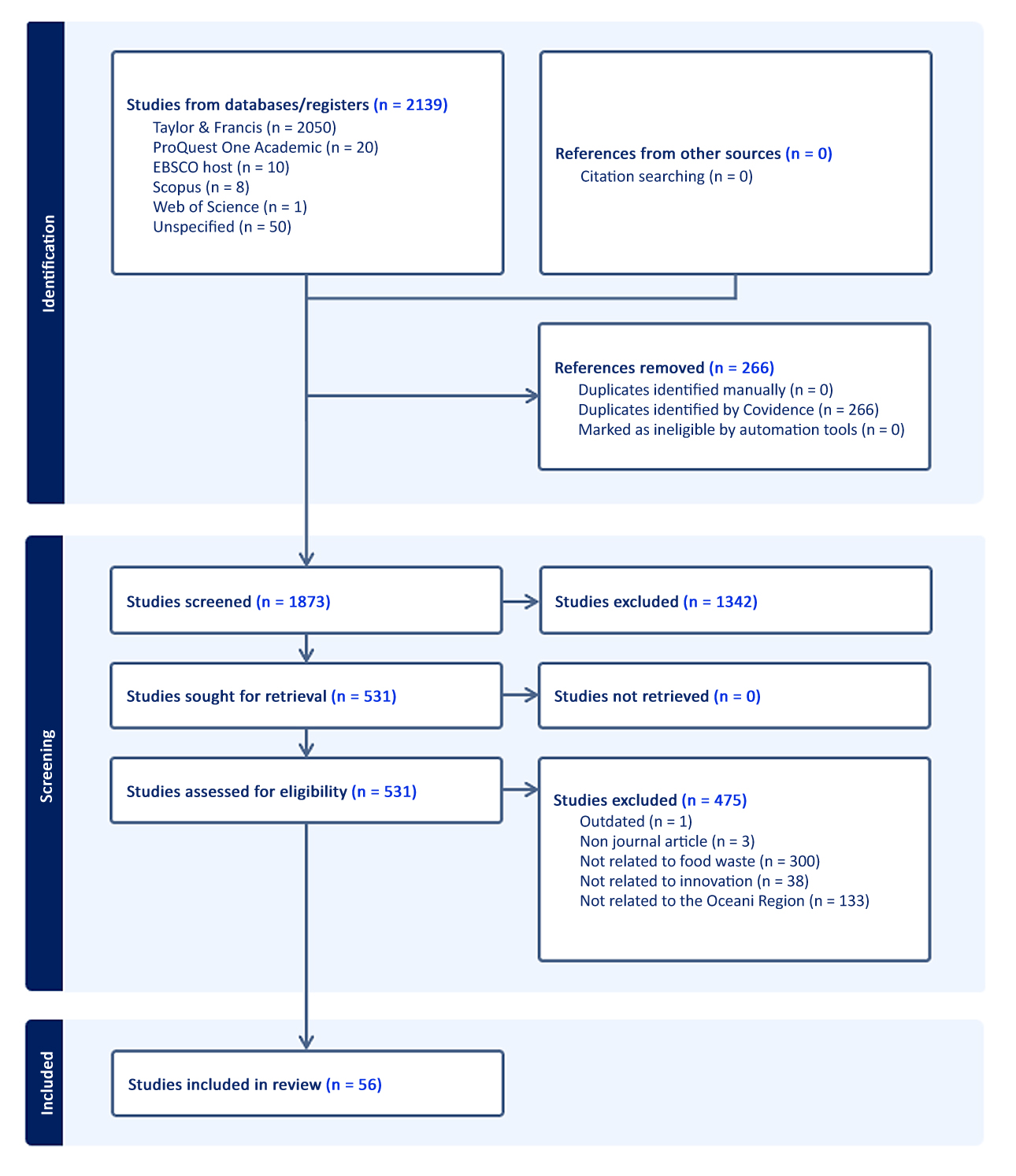 Figure 1. Flowchart of the literature search process (PRISMA).
Research on this topic has been conducted consistently since 2005; however, publications increased from 2020 to 2024. The highest number of publications in this area was in 2024. Scholarly publications are also proliferating in particular regions. Most scholars conducting research in the food waste innovation space are based in Australia (n = 13) and New Zealand (n = 16) in Oceania, and to a lesser extent in the United States of America (n = 9) and Canada (n = 4). However, the study locations showed a different pattern: 51% were conducted in the Pacific Island region. Please refer to the Table S1 provided.
Authorship country location. The authors come from 83 diverse regions. New Zealand leads with 16 authors, followed by Australia with 13. In North America, the U.S. has nine authors, and Canada has four. Europe includes Italy and the U.K., with three each, plus Belgium, Croatia, and Denmark, each with two. In Asia, India has five authors, and China has three. South Africa contributes three authors, and South America has Argentina, Chile, and Mexico, each with one. This highlights varied authorship across the globe, recognizing that some papers are represented in multiple regions because they have multiple authors from different institutions and countries.
Main region where the research is conducted. Oceania is the primary region for food waste innovation research, accounting for 28 studies. North America has five studies, while Europe and Asia each have four. Africa and South America each contribute two studies. Additionally, seven studies provide a global perspective. This distribution highlights Oceania’s dominance in the research, along with contributions from other regions.
Primarily, the methods described in the studies identified in the SLR included reviews (18 studies, 3%), experiments (19 studies, 33.9%) or case studies (15 studies, 26.8%). Some studies used mixed designs, such as case study and other (market research, appraisal: 2 studies, 3.6%), observational cross-sectional studies (1 study, 2.1%), or a case study and an experiment (1 study, 1.1%).
Overall, qualitative studies (37.5%) were more prevalent than mixed methods (25%) in study design, as were quantitative studies (33.9%), which were also more prevalent than mixed methods studies. Secondary data analysis (n = 24) was the primary data collection method, and experiments were also common (n = 17). Many studies used multiple data collection methods, such as combining interviews and focus groups. Other popular methods included experimentation, underscoring its effectiveness in producing reliable results. Another popular method was secondary data analysis, which was also significant, as the study relied on large government survey results and emphasised the value of existing information. Document analysis proved effective for extracting insights from written sources. Interviews, focus groups, surveys, and observations contributed to a diverse range of research strategies. Together, these methods offered a well-rounded approach to data gathering.
In food loss research, a significant portion of the literature (64.3%) does not specify a theory (see Table 1), and when one is stated, it shows limited theoretical parsimony, with some studies reporting the use of multiple theories. Among studies that reference a theory, only 3.6% cite socio-technical transition theory, underscoring its relevance for examining interactions between the social and technical aspects of food systems. Sustainability concepts and frameworks are mentioned in 7.1% of the studies, emphasizing sustainability and transformation. Additionally, social learning and ecological knowledge systems, as well as a critical food systems approach that explores positionality, each account for 1.8% of the literature. While various theories contribute to this discussion, much of the research relies on general observations rather than specific frameworks.
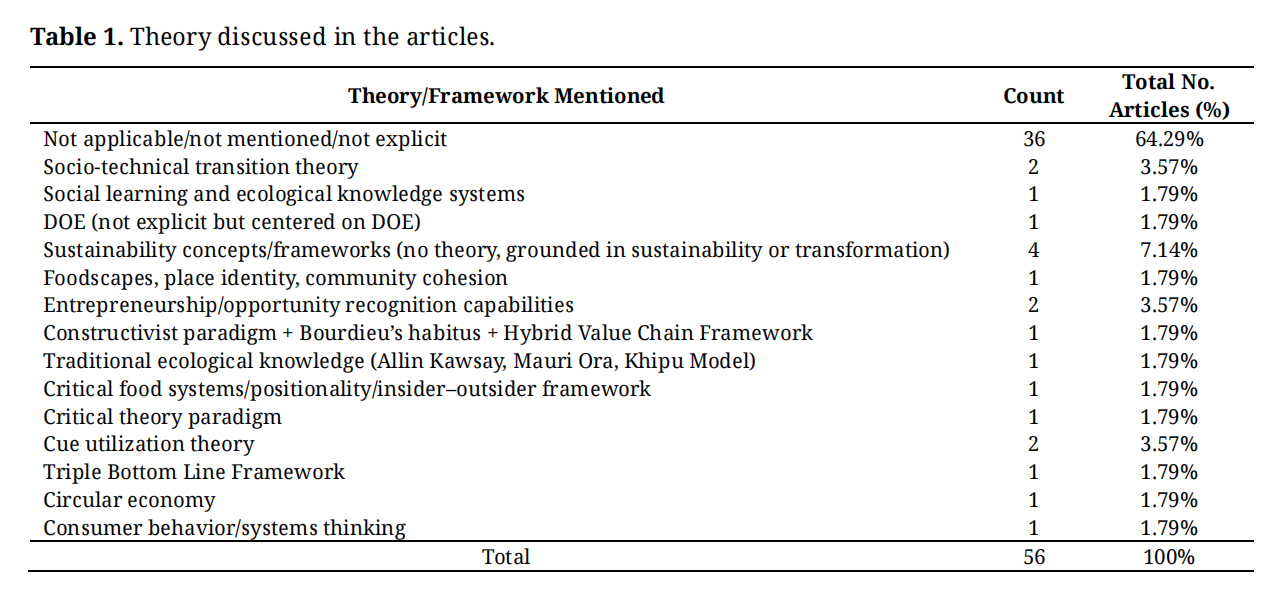 Table 1. Theory.
Examining the agricultural emphasis reveals that 46% of the studies focus on fruits, vegetables, and other plant-based crops (see Table 2). Food systems and processing are represented in the research, but much less often, with only six studies addressing these areas. Among the highlighted processing stages, the focus is predominantly on fruits, vegetables, and plant-based products, which account for 20% of the studies. Additionally, the general processing stage accounts for 18%, underscoring a strong focus on handling and transforming these key agricultural products. Studies could be classified across multiple agricultural sector categories; therefore, percentages are reported as a proportion of total coded instances (n = 98) rather than total studies (n = 56).
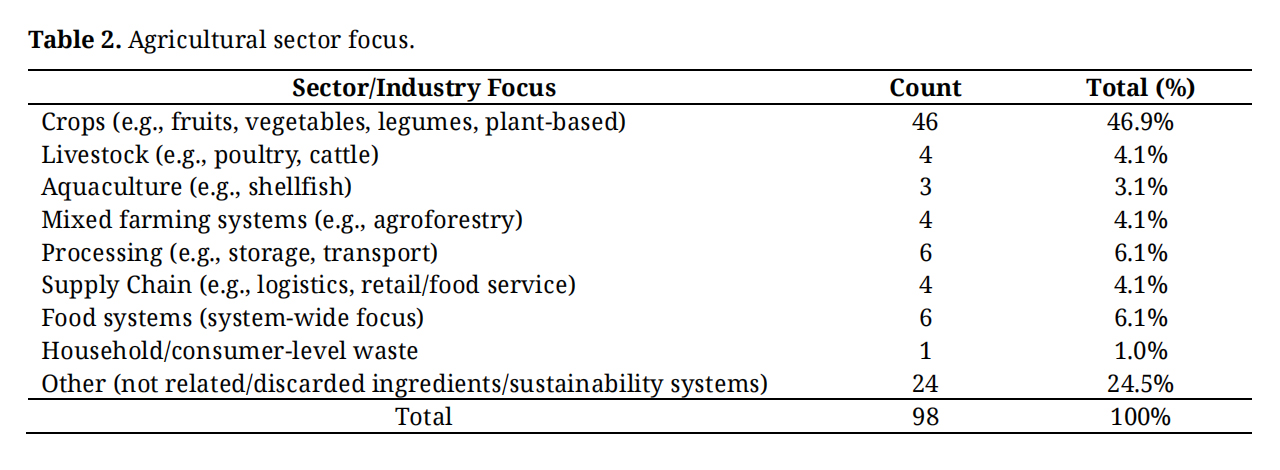 Table 2. Agricultural sector focus.
The food processing stages encompass preharvest (6 studies), harvesting (3 studies), postharvest (18 studies), processing (16 studies), distribution (2 studies), and retail (consumer level with 10 studies focusing on this part of the value chain), ultimately culminating in household consumption and disposal (3 studies). Multistage processes (6 studies) and broader system-wide considerations also shape the journey from farm to table, and 25 studies focused on this. The total count for this category was 86, as studies could be represented in multiple processing stage categories.
Food Waste InnovationStorage issues, such as a lack of cooling facilities, delayed deliveries, or pathogens (n = 20), and consumer preferences, such as overpurchasing, perception, and portion sizes (n = 10), were most often linked to food waste in the identified articles. Technology limitations for monitoring and controlling food waste (n = 7); unavailable, unreliable, or insufficient transport (n = 7); and climate/weather aftereffects, such as water quality issues and delays (n = 10), also feature significantly. Regarding innovative responses to food waste, by-product utilisation (n = 14), shelf-life extension (n = 22), and improvements in storage and transport (n = 10) were most prevalent. The Table S1 includes the varied components identified in the literature. The review highlights the complexity of food waste and the need for targeted strategies to address these challenges effectively.
The literature also outlines practical strategies for reducing waste, emphasizing the importance of utilizing by-products and upcycling to transform waste into valuable resources (see Table 3). It foregrounds methods for extending product shelf life through improved storage techniques, the use of preservatives, and innovative packaging solutions, such as edible coatings, to minimize food spoilage. Advancements in transportation logistics are also crucial for reducing waste during distribution.
The review also notes that composting and developing value-added products support the beneficial reuse of waste. It emphasizes the importance of effective marketing and portion control to raise consumer awareness, while compliance with food safety regulations ensures adherence to standards. Lastly, the review underscores the significance of education and community initiatives in promoting responsible consumption and respecting Indigenous knowledge.
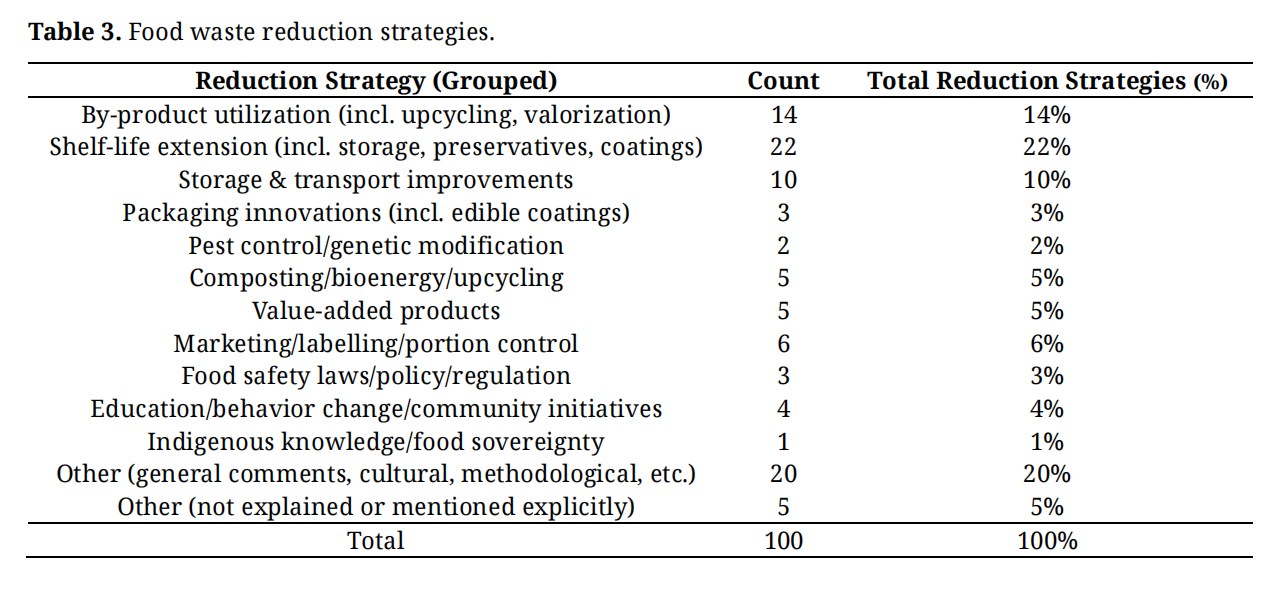 Table 3. Food waste reduction strategies.
The strategies employed in these studies focus on technological and process innovations in the food industry, particularly advances in freezing technology and the use of nanotechnology for food preservation. Key areas include innovations in functional foods, agricultural practices, product development, and market analysis, along with an emphasis on reducing spoilage and utilizing by-products. The circular bioeconomy concept integrates social, process, and policy innovations to enhance ecosystem services through practices such as agroecological tourism and social entrepreneurship. Notable examples include the Virgin Coconut Oil business, which improves shelf life and adds value to products (Table 3). This example shows how food preservation innovations and effective marketing strategies can drive diffusion and scale (Table 4). It also shows how communities get involved and indigenous knowledge is shared (Table 3).
As shown in Table 4, most innovation occurs during the ideation stage (n = 44), with limited advancement at the scalability stage (n = 2). Advances in freezing technology, nanotechnology, and ecological innovations support sustainable agricultural practices and improve food quality and shelf life. These efforts also promote agroecology and sustainable tourism, emphasizing the need for engagement and governance in agricultural ventures. Structurally, the innovation process includes stages, such as ideation (44 instances), prototype testing (24 cases), adoption (10 cases), diffusion (3 cases), and scaling, although data on the latter are limited. These stages provide a framework for effectively navigating the innovation journey in food production and preservation. The total coded count for stages of innovation was 83, reflecting that studies could be classified across more than one innovation stage category.
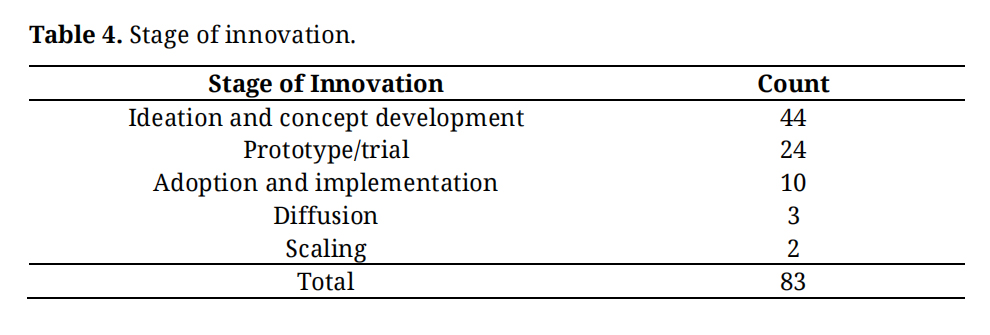 Table 4. Stage of innovation.
Our SLR examines circular practices in Oceania, enabling us to explore the region’s unique challenges and opportunities in this context. However, to enrich our understanding and offer a more comprehensive perspective, we present our findings within a wider global framework. The transition from linear to circular entrepreneurship practices marks a critical shift in how businesses operate within the CE framework. CE represents a transformative model that promotes enhanced material and resource efficiency through sustainable business strategies [34,64]. Central to this model are key principles such as reducing resource use, extending product lifespans, recycling and reusing materials, and regenerating natural resources [65]. In this context, our forthcoming case study will illustrate how a company successfully adapted its processes and partnerships to transition from linear to circular entrepreneurship practices, fostering product reuse and extending product life cycles. This example underscores innovative strategies for waste reduction and highlights transformative community business model innovation and dynamic market growth. By focusing on a successful initiative from Samoa, we aim to showcase how localized efforts can serve as a blueprint for broader global applications. Ultimately, this case study emphasizes the interconnectedness of CE strategies and the applicability of lessons learned in one region to inspire sustainable practices worldwide.
Transformative Community Innovations: The Impact of Poutasi Gardens in SamoaThe following illustrates how communities in a Pacific Island context developed innovative business models and created an environment that supports these ideas, even in resource-constrained settings. Key factors for success include circular methods and community involvement, ensuring these culturally and contextually appropriate solutions can be sustained over the long term.
The Poutasi Garden community development enterprise in Samoa serves as a notable example of Pacific agribusiness development and innovation in reducing food loss. It also highlights the challenges faced in establishing sustainable enterprises in the Pacific.
Poutasi Gardens was established in 2009 as a horticultural community development enterprise, funded by the Tindall Foundation. Located on the southeastern coast of Upolu Island, its remoteness has been an important catalyst for innovation. Most of Samoa’s total population, infrastructure, businesses [66], and commercial-scale agricultural production [67] are concentrated in the northwest of Upolu Island. In comparison, southern Upolu Island has a much lower labor force participation rate, reduced socioeconomic status, and higher levels of customary land ownership [66]. Southern Upolu Island is also prone to high rainfall (up to 4000 mm/yr), which has traditionally restricted horticultural production, particularly of high-value vegetable crops. Agricultural productivity in the area is limited to local root crops sold in domestic, municipal, and community markets. Samoa’s economy also depends heavily on tourism, with numerous medium-sized resorts and tourist sites concentrated along Upolu Island’s southern coast [66].
Given the area’s unique challenges and characteristics, circular practices are especially important. They can enhance resource efficiency and reduce waste, promoting sustainability in local agricultural practices. By reusing and recycling materials within the community, these practices align with the need for a community-centric approach [67] and foster resilience and adaptability. Poutasi Gardens’ proximity to tourism clusters also offers commercial opportunities that can benefit from circular economy principles [68], ultimately enhancing economic viability while protecting the local environment. High local rainfall also encourages innovative agricultural practices that can thrive under these conditions, supporting a more sustainable and productive future for southern Upolu Island.
Poutasi Garden’s business model involves growing mixed micro-leafy vegetables using protective cropping production systems and vertically integrated contractual farming, with products sold directly to local restaurants, hotels, and resorts. Being community-led and having access to customary land, Poutasi Gardens has managed to overcome constraints on land and labor access that often impede commercial-scale agricultural production in the Pacific [69]. Poutasi Gardens was an early adopter of protective cropping, which was relatively new in Samoa at the time. Large, open-ended polytunnels (half-hoop-like agricultural structures) enabled Poutasi Gardens to grow high-value leafy vegetables in a location not conducive to vegetable production, with the added benefit of increased productivity and an almost year-round supply [69]. Contractual farming, another relatively new practice in the Pacific, coupled with short crop harvesting cycles (4–6 weeks), allowed crop selection and planting volume to better reflect market demand, reducing postharvest loss. The product was sorted and graded on-farm, creating mixed-species leafy vegetable packs that were transported in insulated thermal boxes directly to retail outlets within 3 h of harvest, further reducing the risk of loss. In the context of Pacific smallholder farmers’ postharvest handling practices, on-farm grading and the use of insulated boxes are extremely rare.
Because protective cropping and contractual farming are relatively novel in the Pacific [69–71], the team needed to overcome unfamiliarity and limited technical expertise. Poutasi Gardens achieved this by using specialists sourced from international volunteer abroad programs. This proved particularly critical during the early business development phase. Poutasi Gardens operated successfully for almost 10 years. While Poutasi Gardens did not seek to develop branding and market recognition, some local restaurants were actively promoting the enterprise on their menus, with items “…made with Poutasi Garden vegetables.” With limited local competition, strong market demand, and an increasingly health-conscious consumer base, Poutasi Gardens’ future seemed assured [66].
Counter-intuitively, the eventual demise of Poutasi Gardens was the recipe for its own success. The community ran multiple business enterprises, most of which struggled to remain commercially viable. Profits from Poutasi Gardens were progressively diverted to offset the business’ collapse, reducing the capacity to maintain critical infrastructure and source essential farm inputs. The failure to repair and sustain the protective cropping infrastructure eventually made Poutasi Gardens unviable. The community-centric business model, based on shared responsibility and reciprocity, undermined the capacity for clear leadership to respond in a timely and effective manner. The legacy of Poutasi Gardens extends beyond its immediate contributions to agribusiness; it has also fostered a culture of continuous learning and adaptation centered around circular practices. By documenting its innovative approaches, Poutasi Gardens has provided a valuable framework for other agricultural initiatives, demonstrating how sustainable methods can be integrated into everyday farming operations [66]. This legacy is captured in a series of case studies and practical guides that outline specific circular techniques, such as composting organic waste, utilizing rainwater harvesting systems, and implementing crop rotation to maintain soil health.
Moreover, Poutasi Gardens has empowered not only the farmers directly involved but also a wider network of agricultural communities across the region. This initiative also involves sharing newfound knowledge and experiences with others. This community-wide understanding of sustainability encourages the adoption of circular economies within agriculture, fostering resilience against environmental challenges. The lessons from Poutasi Gardens demonstrate a transformative farming approach for this context that prioritizes ecological balance and sustainability. This initiative has shown farmers how to adopt strategic planning by thoughtfully selecting crops and timing for optimal growth. As a result, modern farming practices in the region have improved, enhancing awareness of seasonal cycles and market demands.
In addition, direct online sales of horticultural crops have grown significantly in Samoa, giving farmers a new way to reach consumers directly. This shift not only enhances the market reach for small-scale farmers but also empowers them to capture a greater share of the value chain. Coupled with a renewed interest in protective cropping systems, these developments reflect a broader commitment within the agricultural community to embrace sustainability, innovate practices, and adapt to changing market conditions.
This research makes a notable contribution to the literature on CE models through its SLR and case study analysis, particularly in the context of food loss. This research provides an overview of how circular models can be influenced at the contextual, industrial, and individual entrepreneurial levels. By systematically examining existing studies, the review highlights critical gaps and opportunities for further exploration, emphasizing the need for more rigorous theoretical frameworks alongside applied research. The case study illustrates how a local community, through strategic changes, can systematically adopt and implement circular practices. This example also shows how integrating human–technology dynamics into circular practices can enhance resource efficiency and sustainability. Further, the research advocates incorporating social learning elements and entrepreneurial frameworks to provide deeper insights into opportunity recognition and innovative processes. Collectively, these efforts underscore the transformative potential of CE models, demonstrating how they can deliver substantial environmental, economic, and social benefits across the food sector and beyond.
Studies from various regions show a growing body of research on the causes, implications, and potential solutions to food loss. Despite the breadth of this topic, the literature tends to focus disproportionately on quantitative measures of loss and does not adequately address the underlying socioeconomic and cultural factors that exacerbate the problem. The example showed that without local buy-in and support, achieving sustainable results and implementing circular practices more broadly would be more difficult. More inclusive studies and broader reach are needed to gain a more holistic view of practices from a local perspective.
The findings of this research highlight the need for a more nuanced, practical understanding of research on food waste innovation, CE business models, and nature-based approaches to value-added products. Food waste occurs in various contexts, and its perceptions need exploration. The case provided a more nuanced understanding of the drivers of engaging in or advancing circular practices across macro, meso, and micro motivations. Why circular practices are undertaken in some countries but not in others, or in some parts of the production cycle and not in others, should be investigated in more detail. Solutions to waste and recycling are multidisciplinary and multidimensional and should therefore be approached from this perspective as well. Further research should explore how necessity or opportunity influences the adoption of circular practices. Further research should also explore how these circular practices differ across cultural contexts.
Existing research on food waste innovation reveals critical themes that warrant further investigation, particularly in storage, consumer preferences, and technological limitations. Several key strategies have emerged, such as by-product utilization and shelf-life extension, which hold promise for mitigating food waste. However, many of these innovations remain at the ideation stage, with limited progress toward scalability. This situation highlights the urgent need to develop and implement effective solutions that reduce food waste. Continued exploration of these themes may be vital to advancing the field and achieving substantial reductions in food waste on a broader scale. Why do these ideas stall, and what are the impediments to the scaling or wider implementation of these innovations?
The literature synthesis shows a collaborative effort by researchers, policymakers, and practitioners to address food loss through diverse interventions, from technological innovations to community-level initiatives. However, the findings suggest a gap in multidisciplinary engagement, particularly in integrating food loss strategies with broader sustainability goals. The review highlights that while many low- and middle-income countries are actively addressing food loss, they need greater focus on policy frameworks that support effective implementation and scaling of interventions.
The current literature has identified several practical interventions, such as improved storage facilities, enhanced supply chain logistics, and community awareness programs. However, the geographic variability in research focus and the effectiveness of these interventions suggest that more localized studies are needed to tailor strategies to specific contexts. Therefore, this research provides a baseline for local stakeholders to use this overview of existing practical interventions to compare and evaluate their own efforts or to determine how to adapt these strategies to better meet their local needs.
The average cost of implementing food loss reduction measures varies across regions, economies, and operations. More comprehensive cost-benefit analyses are recommended to clarify the returns on investment associated with food loss reduction initiatives. More context-driven solutions and innovations across different contexts should also be identified and explored using a cost-benefit approach. In conclusion, while the body of literature on food loss is expanding, future research should prioritize exploring the qualitative dimensions and socioeconomic implications to create holistic strategies that not only curb food loss but also enhance community resilience and food security.
Ethics approval was obtained from the University of the Sunshine Coast Ethics Committee before conducting the research. Ethics approval number (A231889).
The following supplementary materials are available online, Table S1: Characteristics and Details of Included Studies.
All data generated from the study are available in the manuscript.
Conceptualization, SDK and KM; methodology, KM and MLH; validation, SDK, SU and KM; formal analysis, KM, MLH and SDK; investigation, SDK and KM; resources, SDK and SU; writing—original draft preparation, SDK; writing—review and editing, SDK, KM, SU, MM; supervision, SDK; project administration, SDK; funding acquisition, SDK and SU.
The authors declare that they have no commercial or financial relationships that could be construed as potential conflicts of interest.
The authors declare that financial support was received for the research, authorship, and/or publication of this article. This research received support from the University of the Sunshine Coast (UniSC) through the Australian Centre for Pacific Island Research-UniSC Summer Student Scholarship, Australia. This is also supported by the ACIAR CS/2020/191 grant entitled “Adopting a gender-inclusive participatory approach to reducing horticultural food loss in the Pacific”.
The authors thank Veronica Vaaiva, Seeseei Molimau-Samasoni, and Angelika Tugaga for their significant contributions and assistance in accessing crucial information throughout the research project. Their efforts were instrumental to the success of this case study.
1.
2.
3.
4.
5.
6.
7.
8.
9.
10.
11.
12.
13.
14.
15.
16.
17.
18.
19.
20.
21.
22.
23.
24.
25.
26.
27.
28.
29.
30.
31.
32.
33.
34.
35.
36.
37.
38.
39.
40.
41.
42.
43.
44.
45.
46.
47.
48.
49.
50.
51.
52.
53.
54.
55.
56.
57.
58.
59.
60.
61.
62.
63.
64.
65.
66.
67.
68.
69.
70.
71.
de Klerk S, McIntyre K, Underhill S, Miles M, Harris ML. Circular Practices and Value Creation Strategies in Food and Agribusiness: A Review and Oceania Case Study. J Sustain Res. 2026;8(3):e260080. https://doi.org/10.20900/jsr20260080.

Copyright © Hapres Co., Ltd. Privacy Policy | Terms and Conditions



